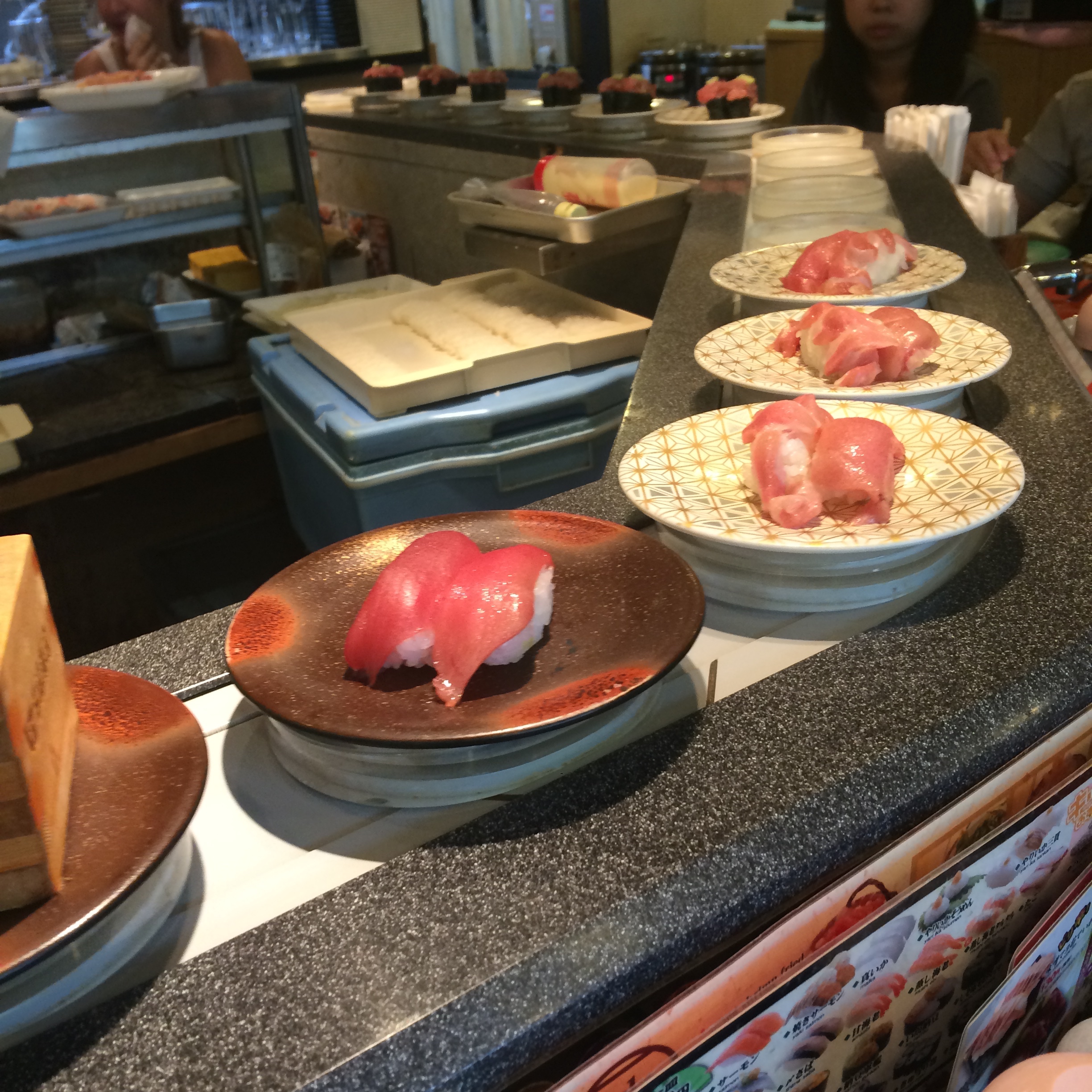
Sushi meals come in many shapes and sizes here in Tokyo, and I can pretty much guarantee that no matter which place, style, etc., you choose it will be better than the sushi you’ve had back in the states. This week I’ve had 4 sushi meals: 3 serious sit-down (totaling 3 Michelin stars), and 1 of the pop-in conveyer-belt variety (not to mention the delicious sushi breakfast at Daiwa last week that I already covered). Conveyer belt is always fun, of course, but I’m going to focus on the serious sit-down meals.

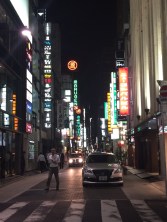
First up was Sushi Iwa in Ginza. 1 Michelin Star, 6 seats, 2 dinner seatings, no menu. Ginza is a bustling area at night. Men in suits, expensive cars line the streets, bars and clubs everywhere…and amongst all of that, in a traditional wabi-sabi style building with the curtain in front of the sliding bamboo door, sits Iwa.

The meal started with appetizers (a few pieces of sashimi, a thinly sliced scallop-like mollusk served as a sandwich between two pieces of nori, a little bowl of crab, more sashimi of tuna with wasabi, abalone, bonito, and a cooked piece of fish served with radish), and then moved onto the sushi courses.
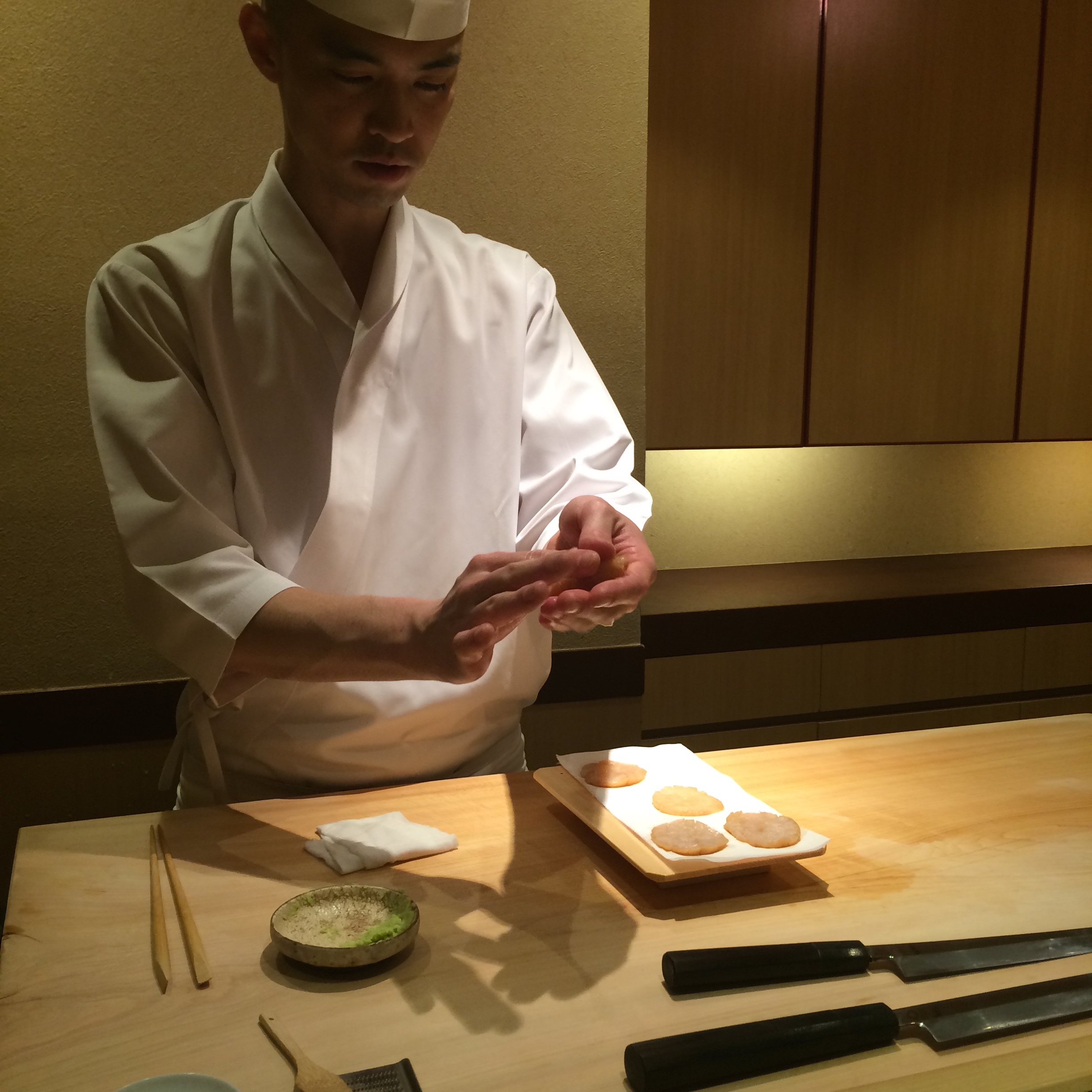
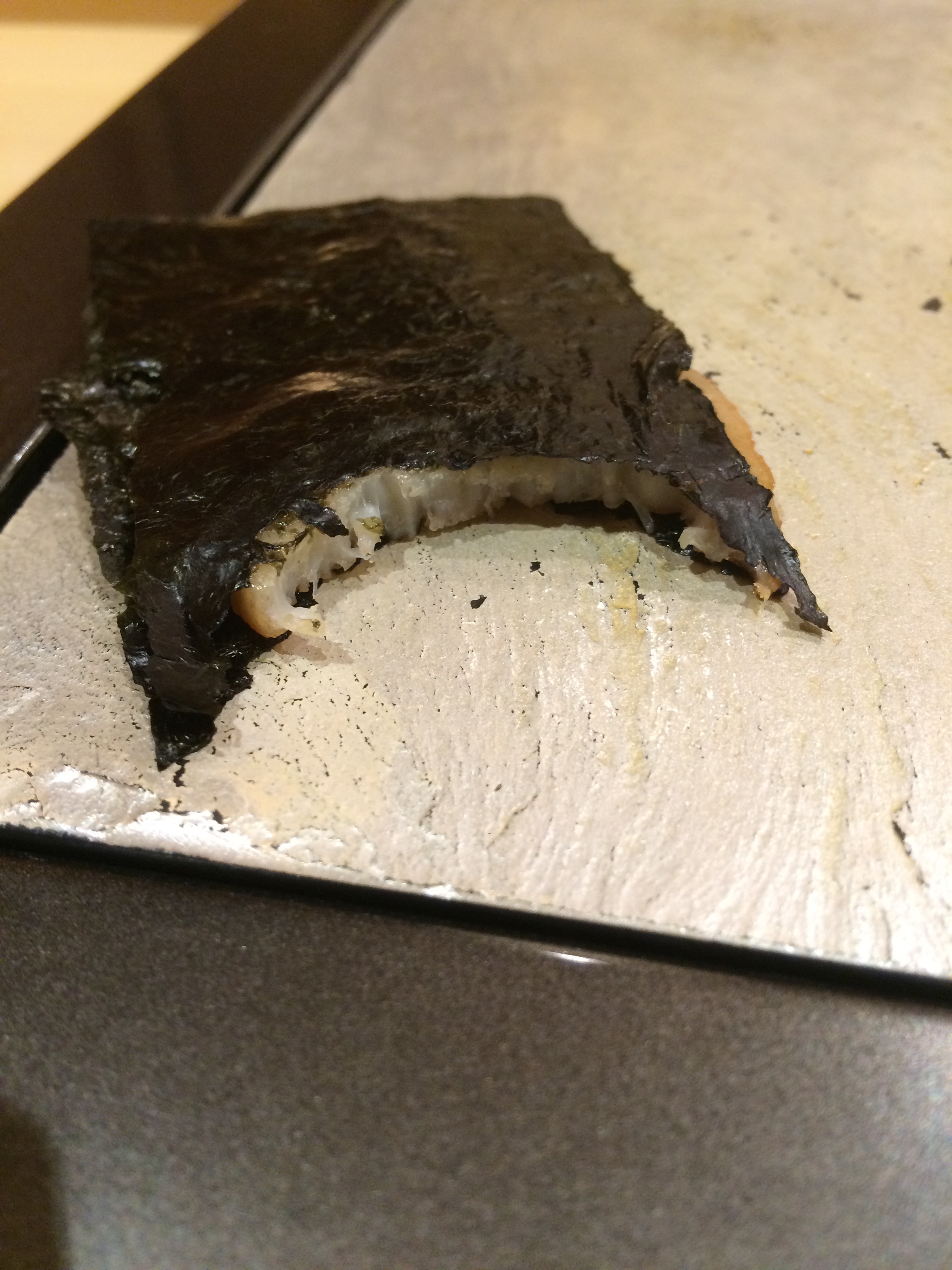
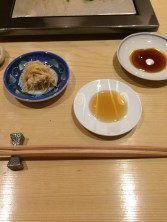

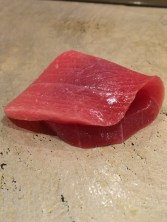

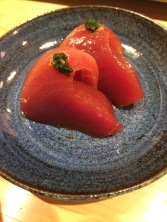

The translation for many of the fish was difficult, so a few pieces of sushi go unaccounted for, but Chef Tsunoda was able to communicate the majority of them. We had sea bream, white shrimp, tuna, toro, mackerel, an awesome scallop which had been tenderized, a fresh shrimp, scallop maki (rolled in seaweed), fantastically fresh uni flown in that morning, a local species of clam, anago (sea eel), and tamago. We ordered 2 different sakes, chef’s choice, and were served the same one that we loved at our kaiseki meal in Kyoto – Kamoshibito Kuheiji. We couldn’t believe our luck because we had been talking about it for days since we first had it!!
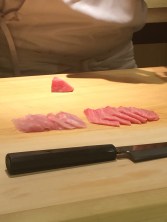
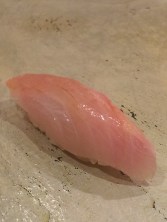
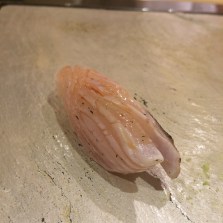

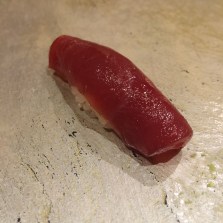
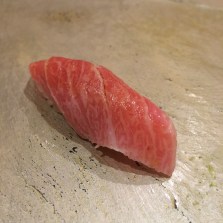
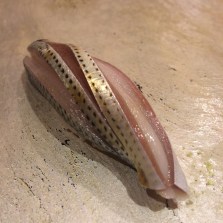
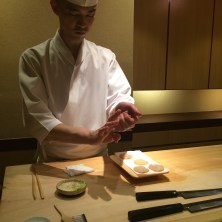
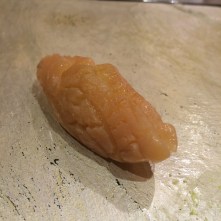

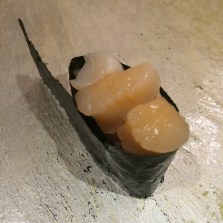


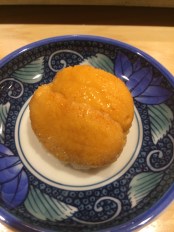


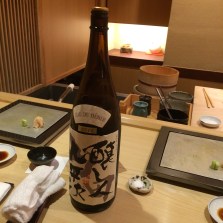
There was not a misstep in this meal. Fantastic bonito and uni, and toro that looked more like wagyu than any tuna I’ve ever had…plus I didn’t use one drop of soy sauce during the meal. It was really fun that Sushi Iwa had such a unique roster of fish – I loved trying multiple pieces, local to Japan, that I had never had before. And look at how beautifully the mackerel is cut (the silver skin cut almost like a spiral) – there was true artistry happening right in front of us, and in such a small space that it was as if we had our own private show. I loved watching as chef delicately placed 1 drop of yuzu (literally 1 drop) on a piece of fish. This meal was all about subtlety and it really worked!
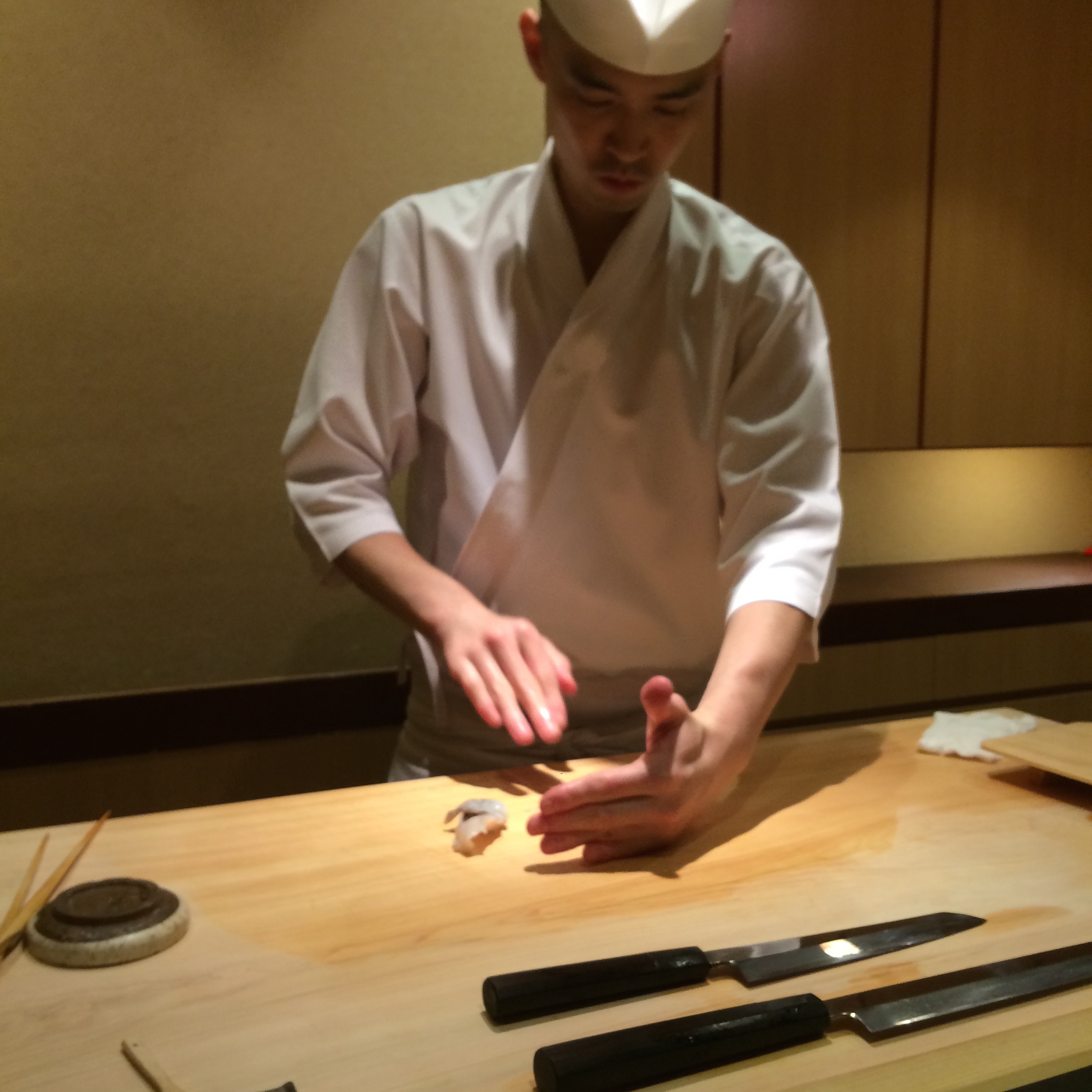
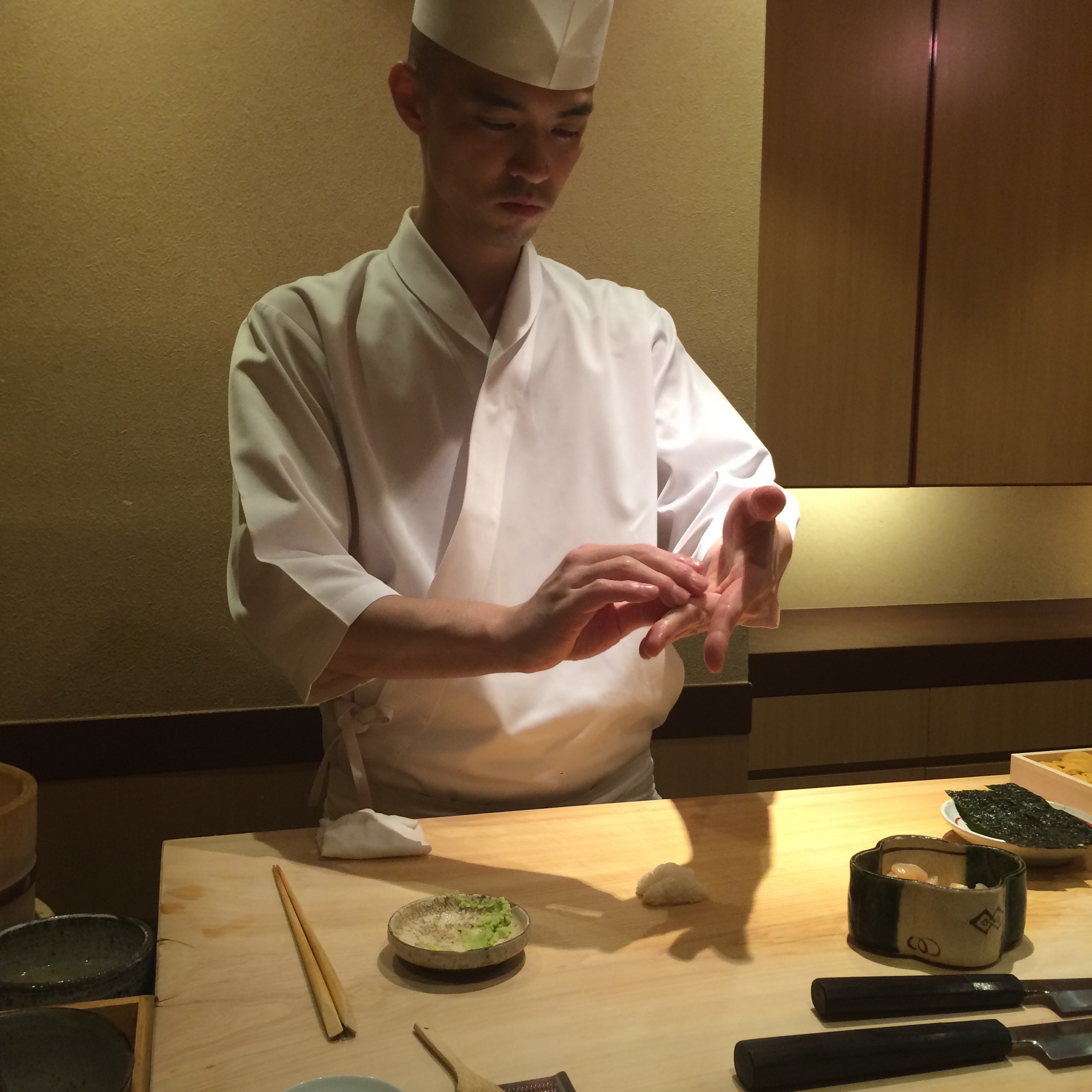
One thing I noticed for the first time on the trip was how gigantic chef’s hands were and how strong, and yet nimble and delicate, they have to be in order to master this art. It got me wondering if survival of the fittest comes into play for sushi chefs – if your hands are too small, are you immediately shown the door?! I had a lot of questions (I didn’t ask this of course, but I would have liked to) for Chef Tsunoda throughout the meal, and he was beyond gracious. He saw that we were into sake, so he poured us each a taste of an aged sake at the end of the meal, just so that we could try it and compare to the different sakes we drank throughout the meal. This was definitely the most unique of the sushi experiences I had in Tokyo, thank you Chef for making it so memorable…and delicious!

The next sushi meal was lunch at Kanesaka, a 2-star Michelin rated restaurant. Sushi “lunch sets” in Tokyo are a great way to experience an amazing place at a fraction of the price. No photographs allowed at this 16-or-so seater, but I’ll briefly talk about the meal: Started with snapper, followed by amazing yellowtail, then a great piece of tuna brushed with a little bit of a sauce. Fatty tuna (toro) came next and literally melted in my mouth…fantastic!! Squid served with wasabi, but without sauce (which was unlike the other places I had been this trip). Mackerel came next – honestly my least favorite in the typical Japanese sushi lineup, but still very good here. An amazing piece of bonito with scallions was next, followed by a scored scallop with wasabi and a light sauce. White shrimp, followed by some sort of pickled vegetable roll, and tamago and anago (sea eel) to finish it off. This was great sushi, but a little more straight down to business than our experience at Iwa, which was a little lighter/more fun/more social. This wasn’t my personal favorite of all the sushi I’ve had this trip, but it was a really good meal with great fish which is obviously key…I’m just lucky enough to be picking favorites among champions here.

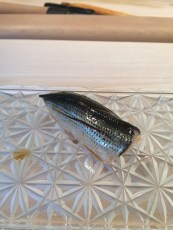
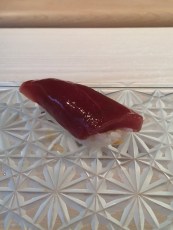

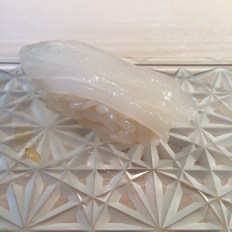
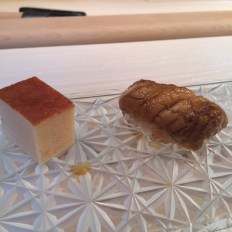
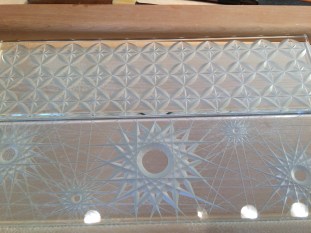
The third, and last, big sushi meal this week was at Aoyama Sushi Sen. This isn’t a place that you will read about in books or blogs, most likely, but was a place that my brother had been taken to by friends a couple of months ago. He hit it off with the chef the first time around, so today’s experience was a lot of fun! Chef Keiichirou talked to us throughout the entire lunch, mostly about baseball, which is what he and my brother had bonded over previously, but also about LA, and my trip to Japan in general. The squid at Sen was definitely the best I’ve had in Japan (great flavor and texture – less chewy than the rest I’ve had), and the bonito had a really amazing smoked flavor, different than the other pieces of bonito I’ve had on this trip. 8 seats at the bar, plus a few tables, this is another really intimate sushi experience. Keiichirou made our entire meal directly in front of us (perfect for pictures) and presented each piece on traditional Edo kiriko cut glass. This was a great way to finish up the sushi portion of my trip. The fish was fantastic, and Keiichirou was a lot of fun, which made the experience of dining with him one that is hard to find as a traveler here in Japan…thank God Michael had already warmed him up prior to this visit 🙂

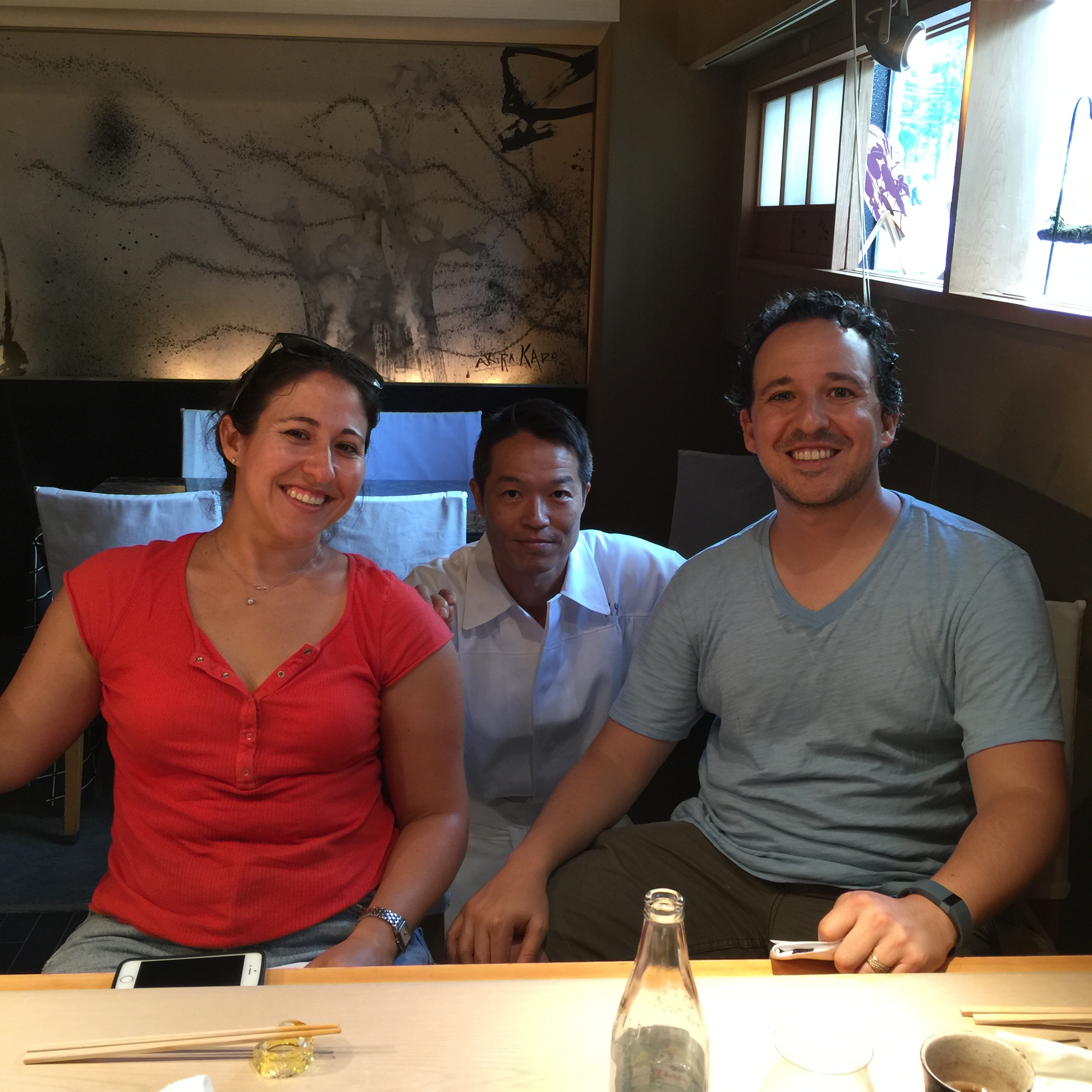
I’ve been so spoiled here, and so lucky to have gotten to eat all of this amazing and beautiful sushi. It’s been quite an experience to watch these chefs in action! I wonder if my attitude towards sushi at home will change at all after being this spoiled? I wonder if I will use less soy sauce now that I’ve learned how to properly eat sushi in Japan…or does our sushi at home need the flavor of the soy? Only time will tell, but I’m so happy to have gone to a wide range of sushi restaurants on this trip, to really understand the spectrum of sushi in Japan.
I’ve eaten so many other types of Japanese cuisine on this trip – tonkatsu, ramen, desserts, candy, etc. – and done so many cool things this week, so keep staying tuned for more.


Okay non-baseball question of the day — what is the single best bite of food you’ve had in Tokyo?
LikeLike