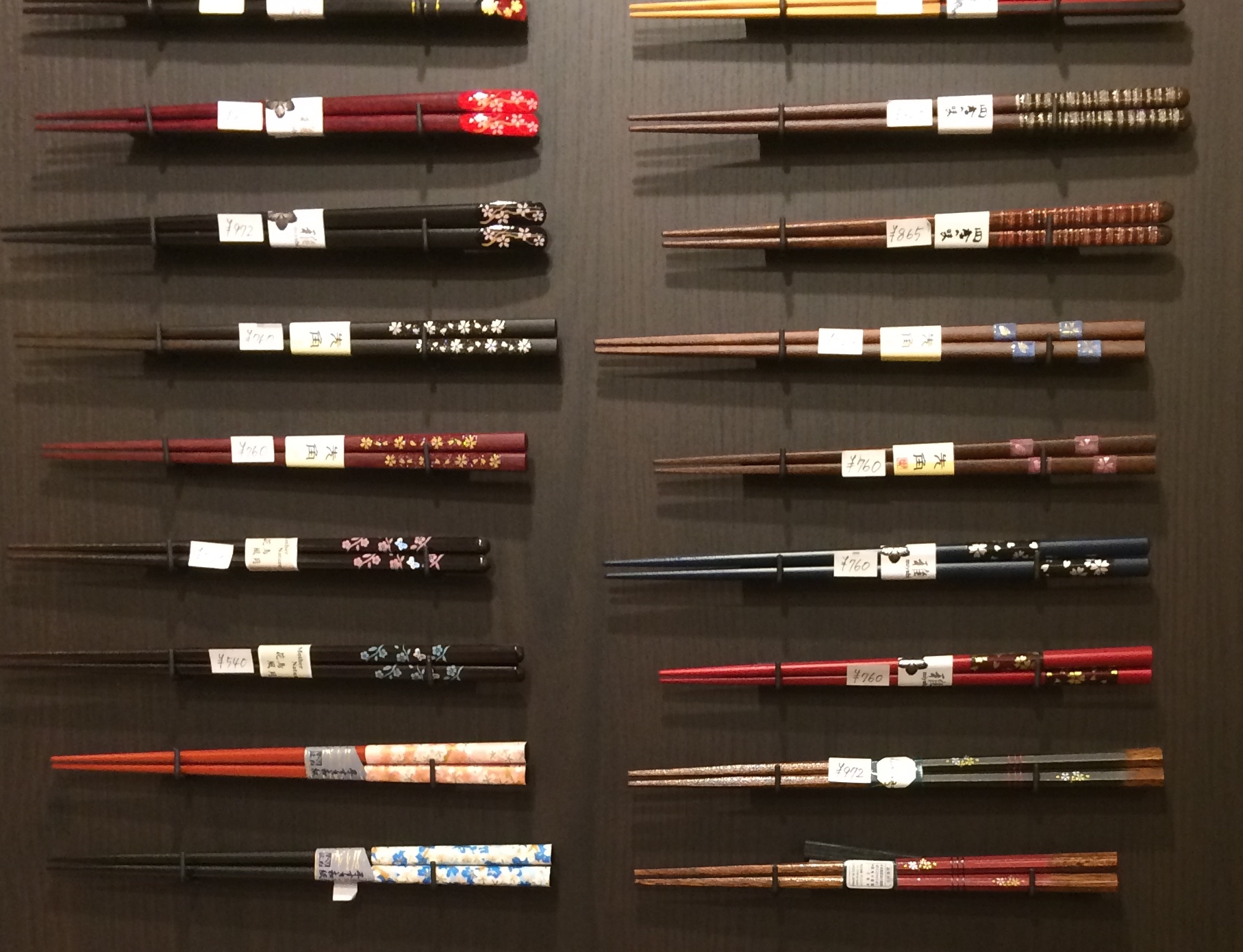
I’ve been in Kyoto the past few days, just 2.5 hours from Tokyo. Kyoto was the last capital in Japan (before it moved to Tokyo where it remains today), and everywhere you look, from street corners to beautifully curated spaces, you’ll see a temple or a shrine…but I’ll get into all that later. There is so much to write about, so I’m just going to focus on some food – one meal actually, our first dinner in Kyoto.

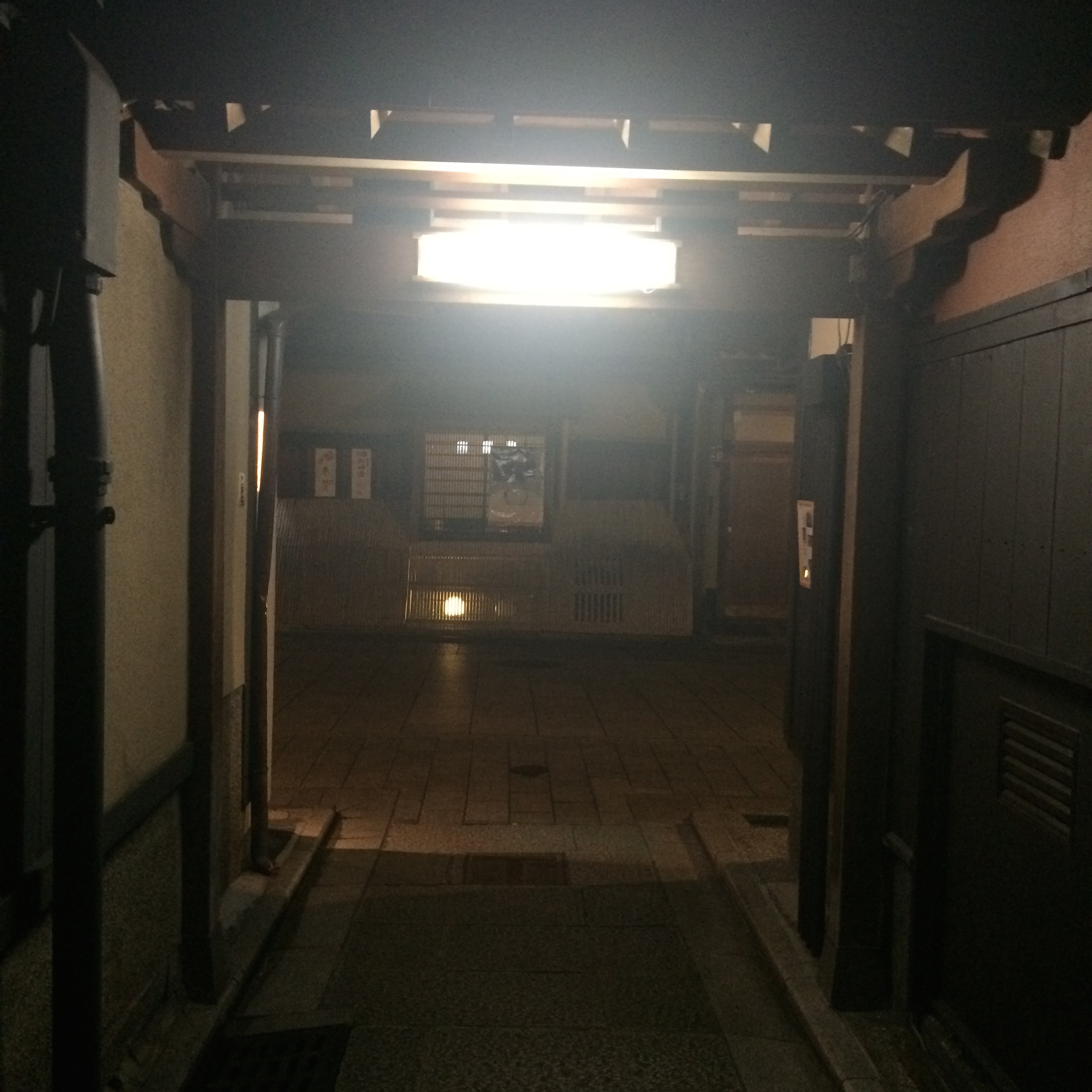
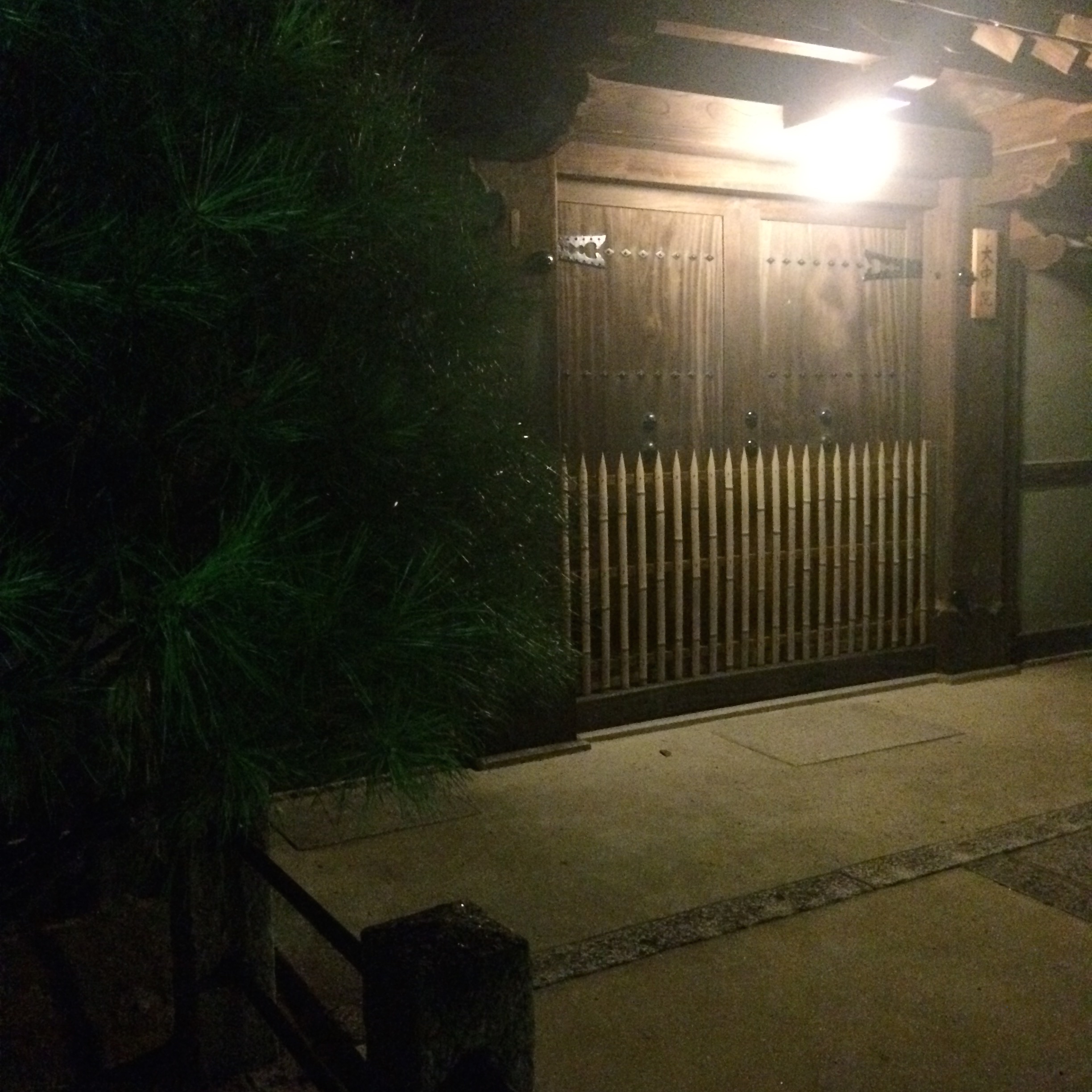
This dinner was a traditional kaiseki meal in the Geisha district of Kyoto – Gion. This area looks straight out of a movie – tiny alley-like streets, nondescript building facades with lit lanterns telling you that they’re open. It took us a couple tries to find the right place (remember these signs aren’t in English!), but with a little help we got there. We slid open the wood door and were met by our hostess and waitress for the night, in full traditional kimono.
Kaiseki means multi-course Japanese meal, and at Gion Nanba this meant 12-courses. We sat at the bar of this traditional Japanese building, instead of a private tatami-mat room – it was great to see the chefs creating each dish right in front of us! Everything we ate was fresh, local and seasonal – it was truly a memorable meal and experience.

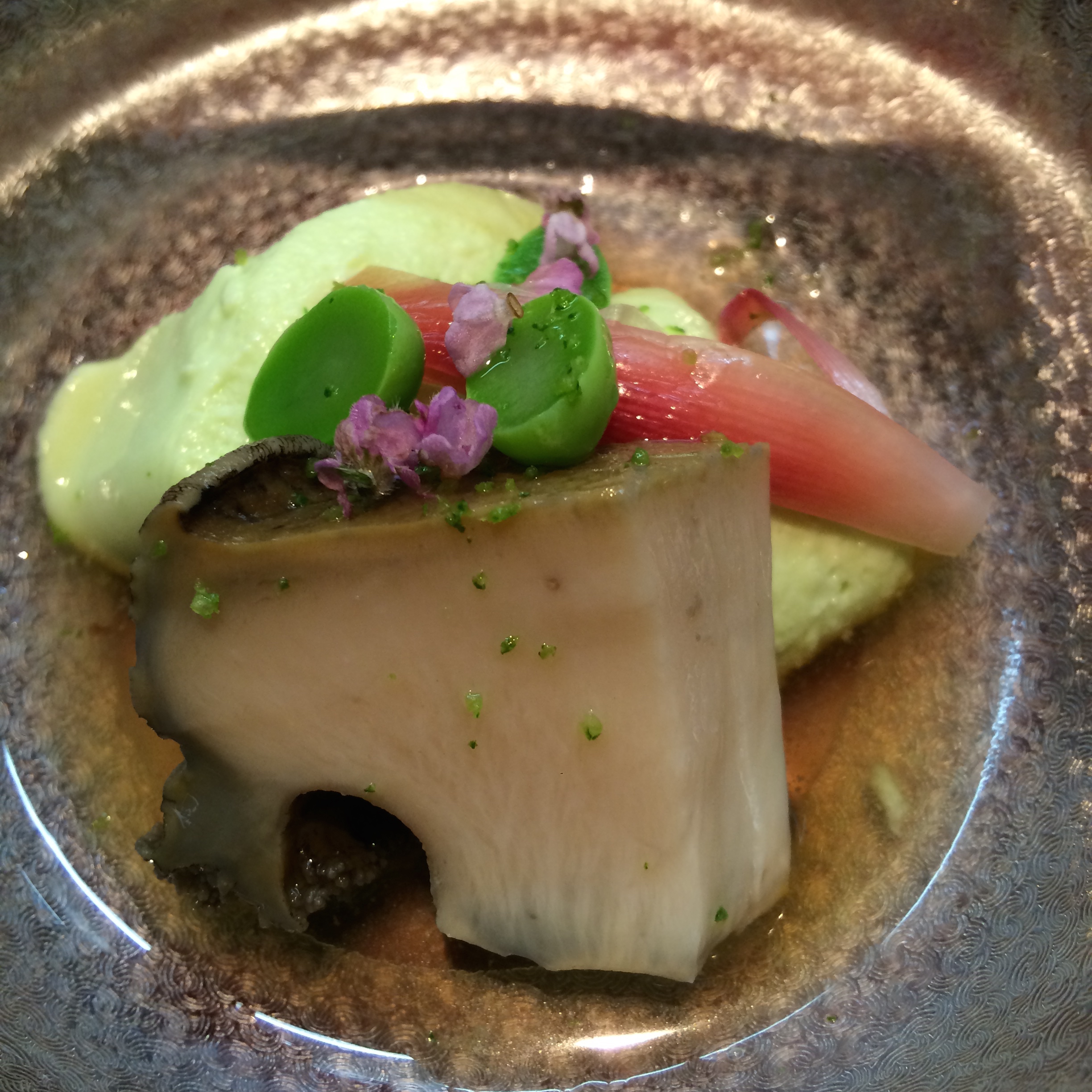
First up was Abalone with an edamame custard, actual edamame and a pickled onion. I don’t think I had ever had abalone before this, glad to add it to the list.

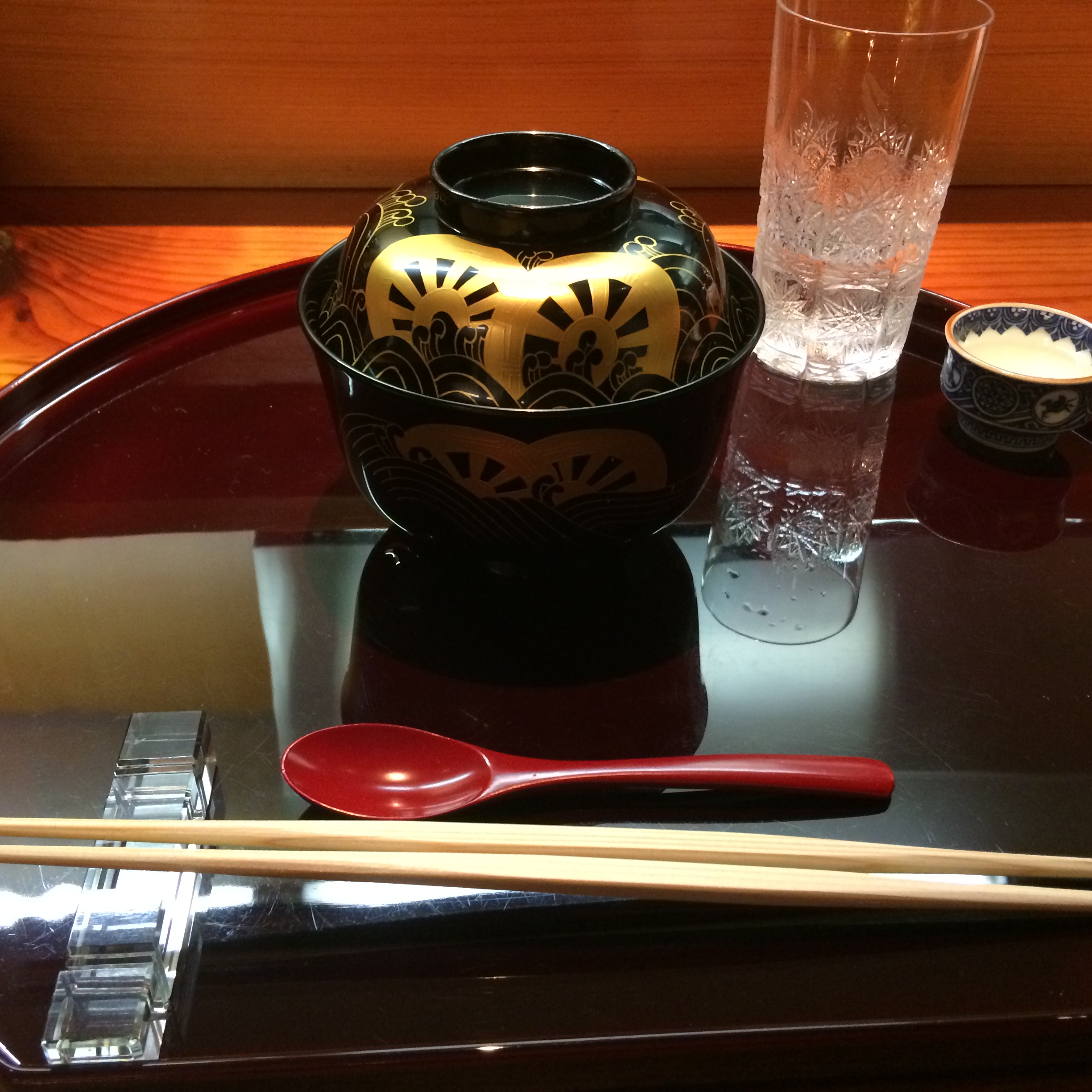
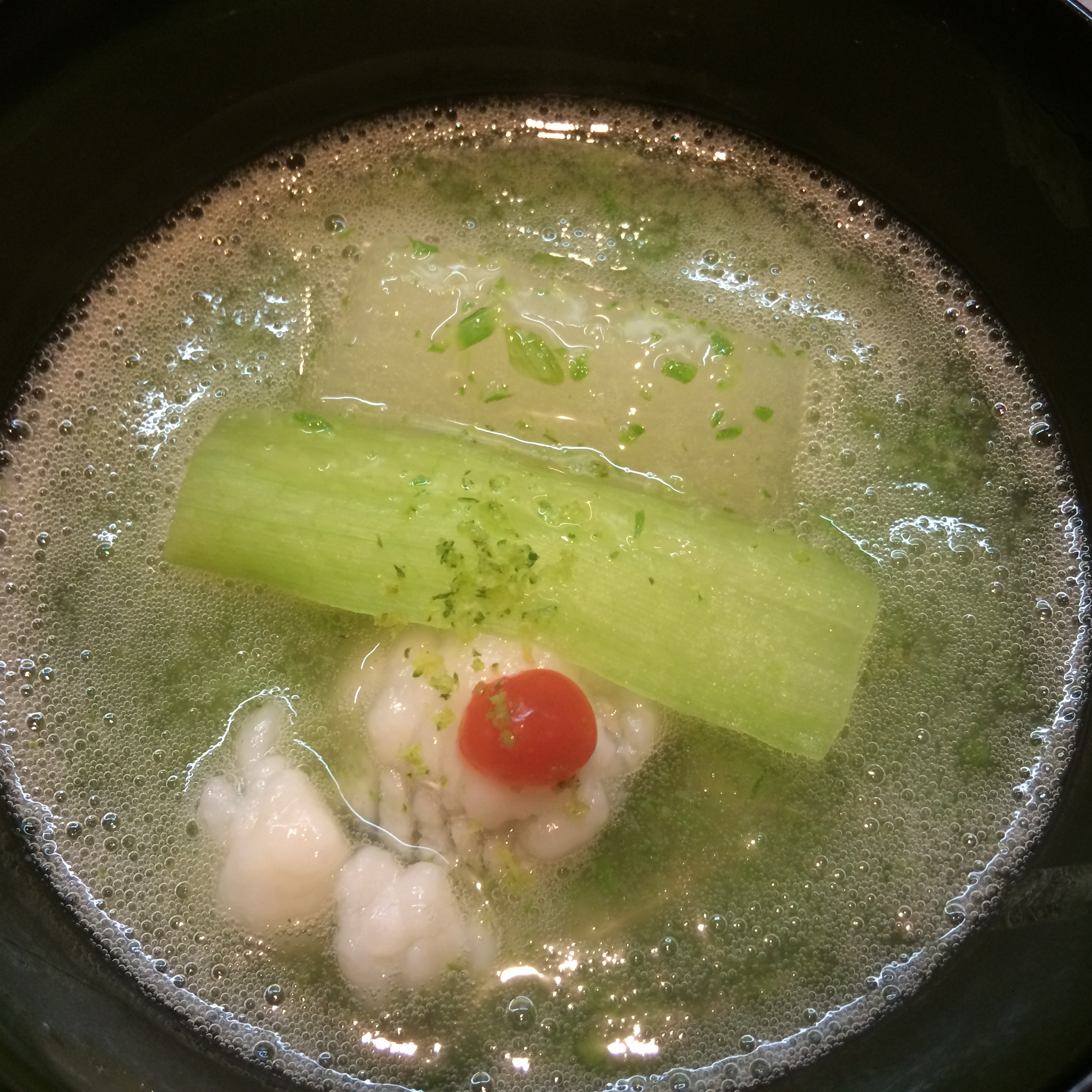
Next we had a soup made from okra, with sea eel (anago), celery and winter melon. Anago seems to be very common in Japan, and I like it so much better than unagi (fresh-water eel).
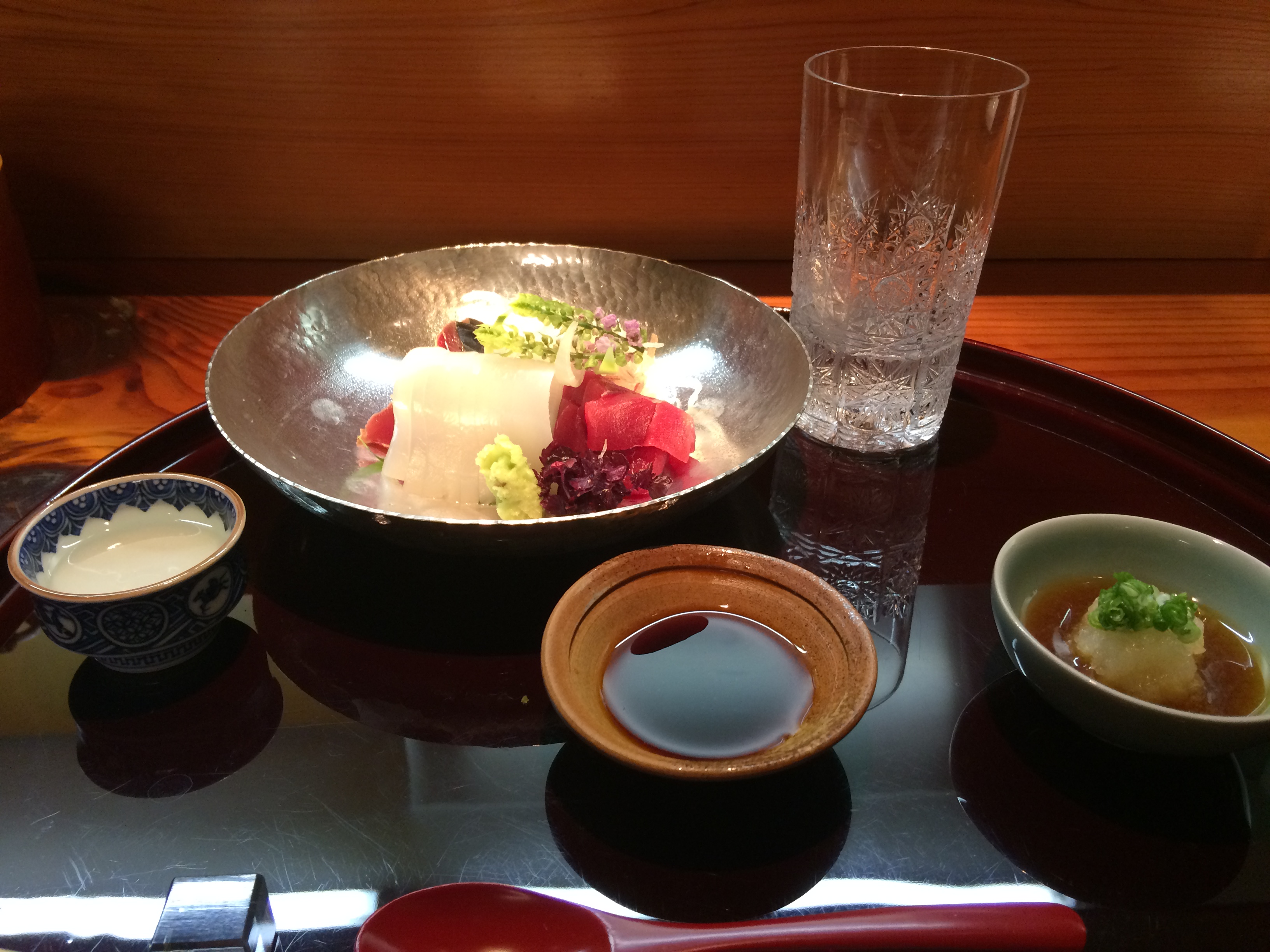
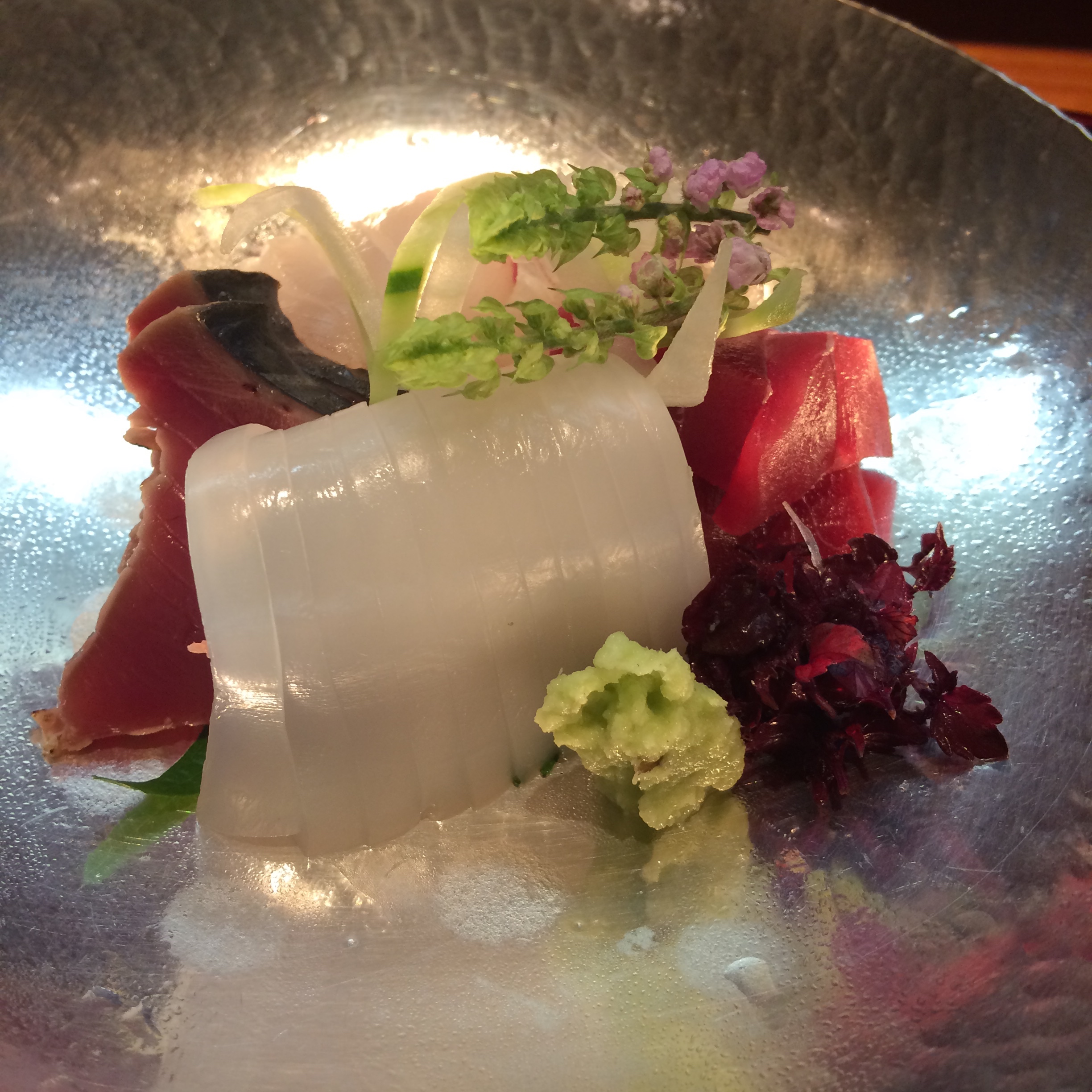
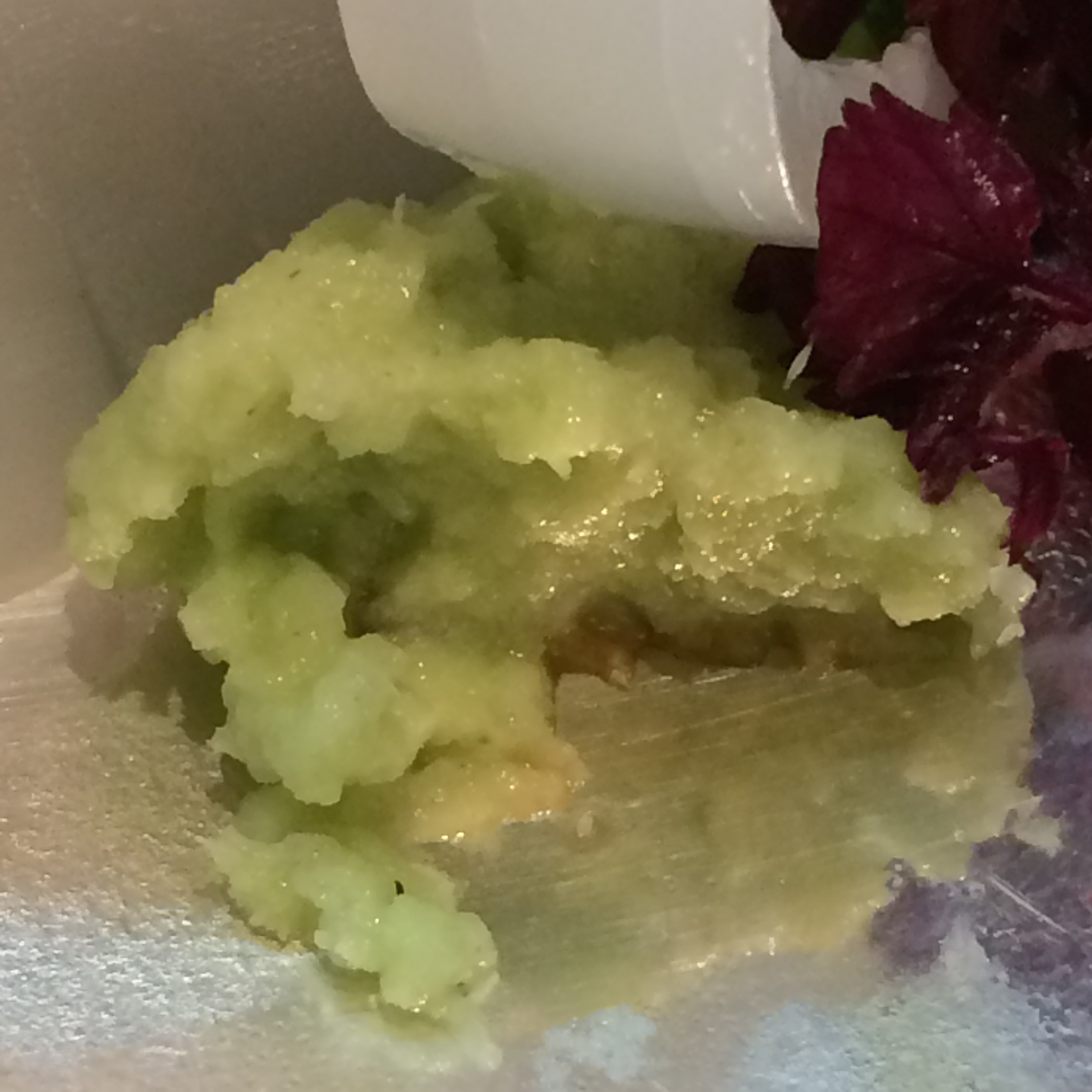
Third course was the sashimi course – tuna, bonito, squid and sea bream with fresh wasabi. So fresh and so clean. And real, grated wasabi is so flavorful and actually has a texture unlike the paste version we eat at home.
The meat course was Wagyu, of course, with ponzu and fresh wasabi. If you look close enough at this photo you can see the marbling of the meat – so delicious!

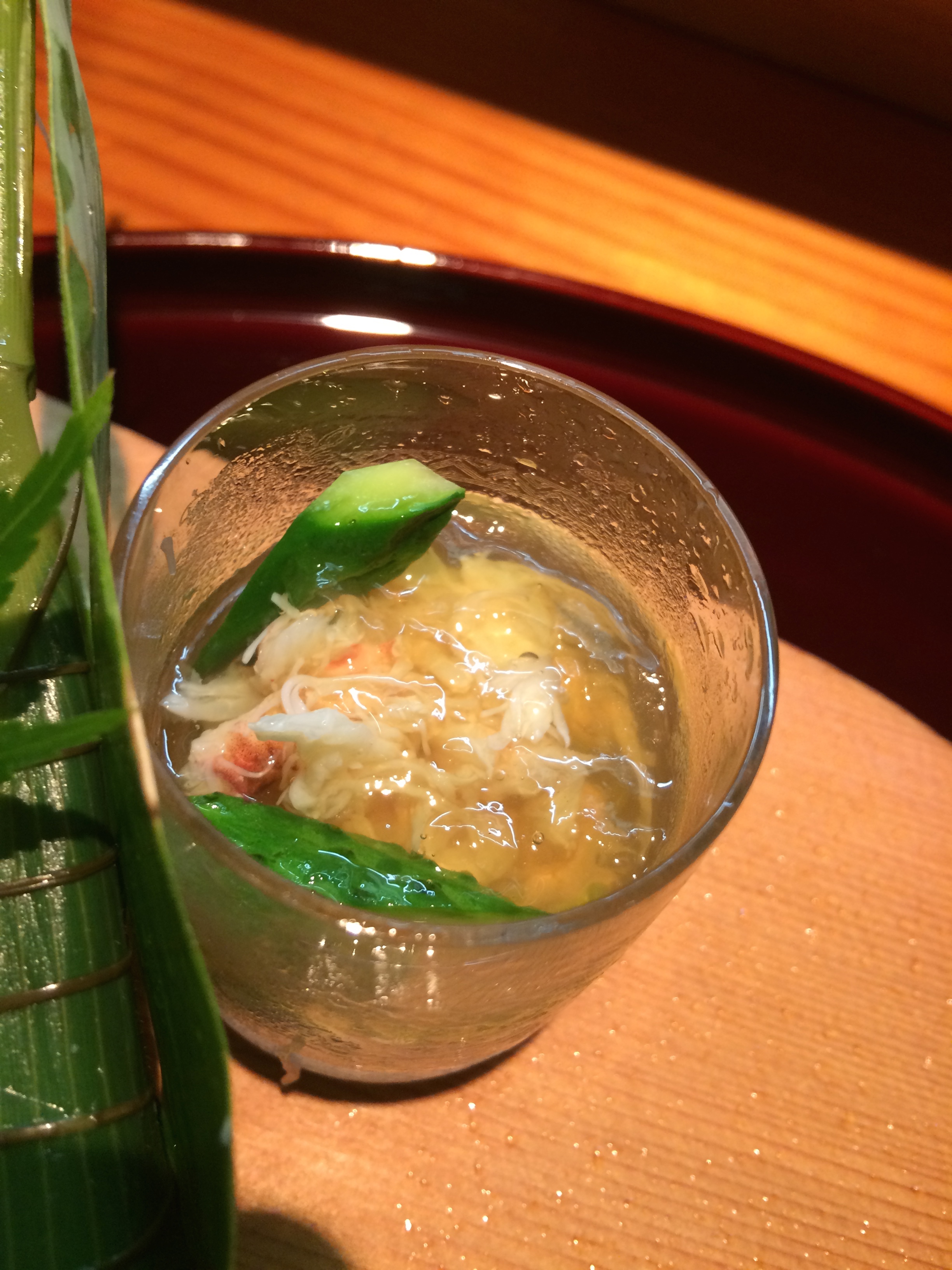
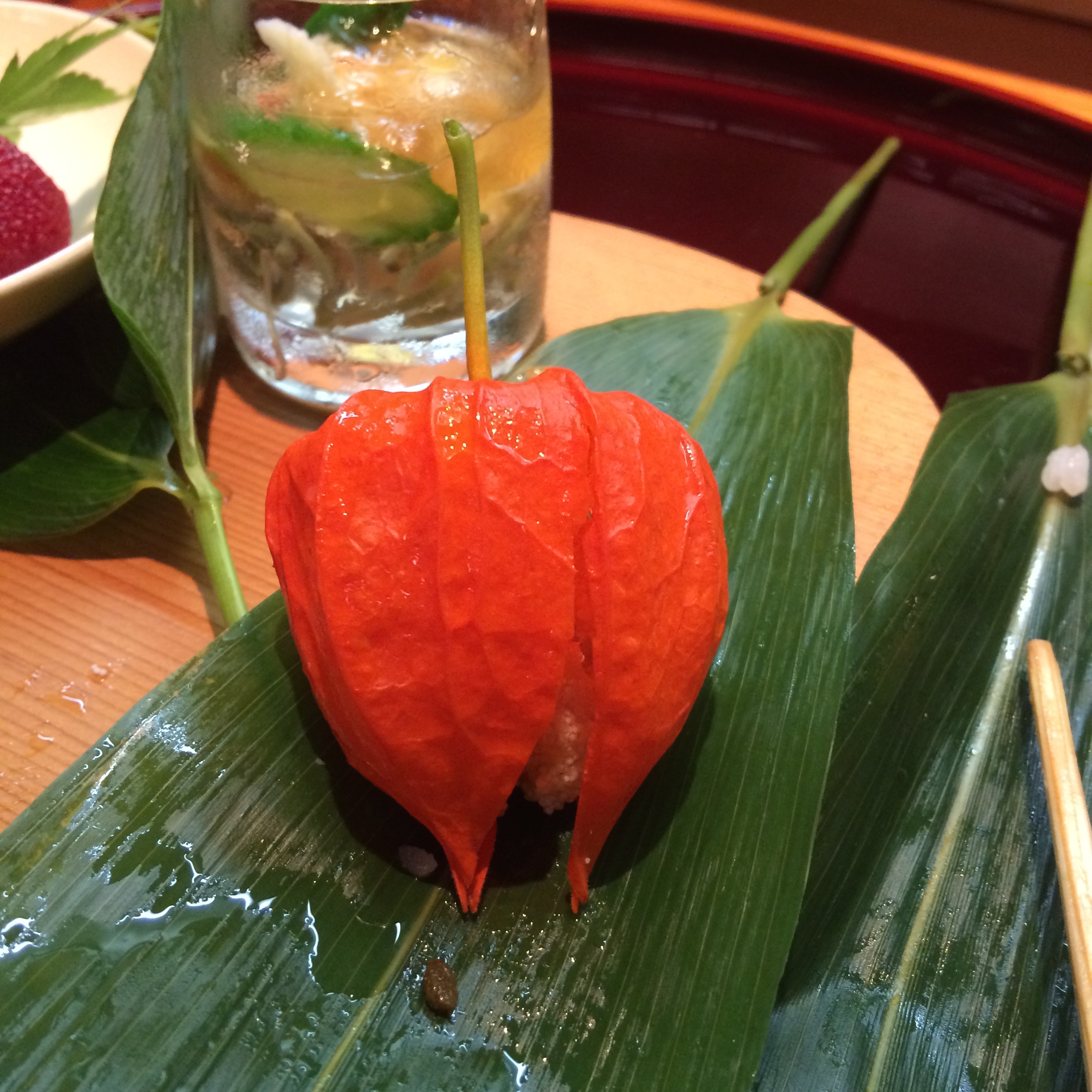
This next plate was so intricate and beautiful. There was a conical leaf-wrapped present with a piece of sushi inside. This present was tied with string so precisely and yet it was so delicate. A shot of crab with cucumber and a gelatinous sea-plant that reminded me in a way of chia seeds (the gelatinous part, at least). Lastly a small dish with a slice of amazingly sweet sweet potato, a mountain peach (yamamomo…WOW!), a tempura-fried piece of fish, and a decorative lantern flower filled with egg and rice.
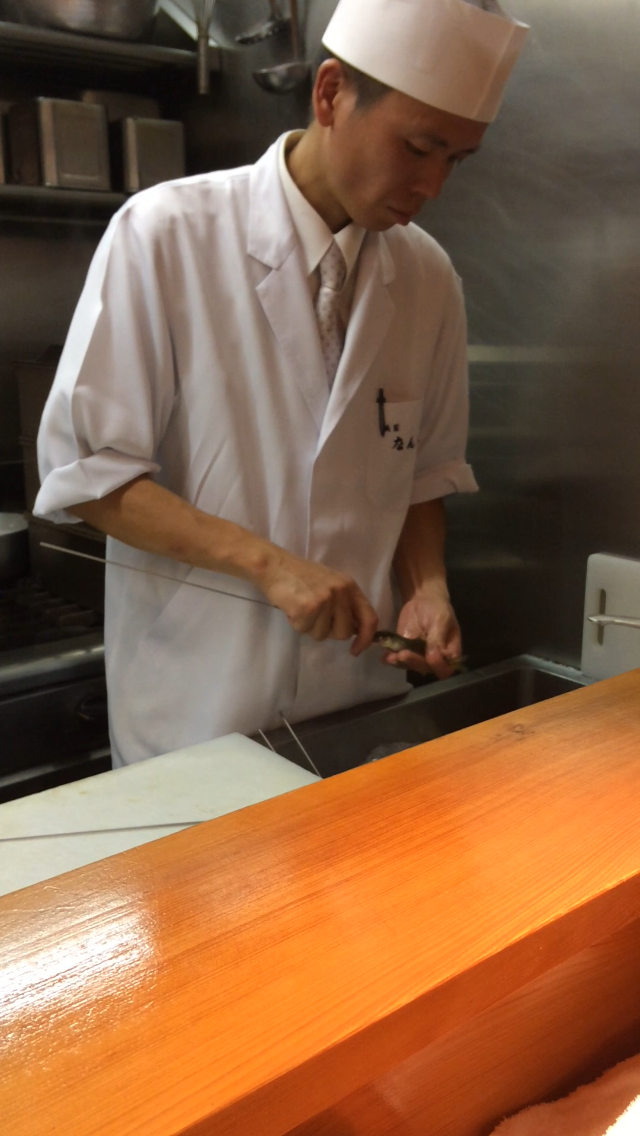
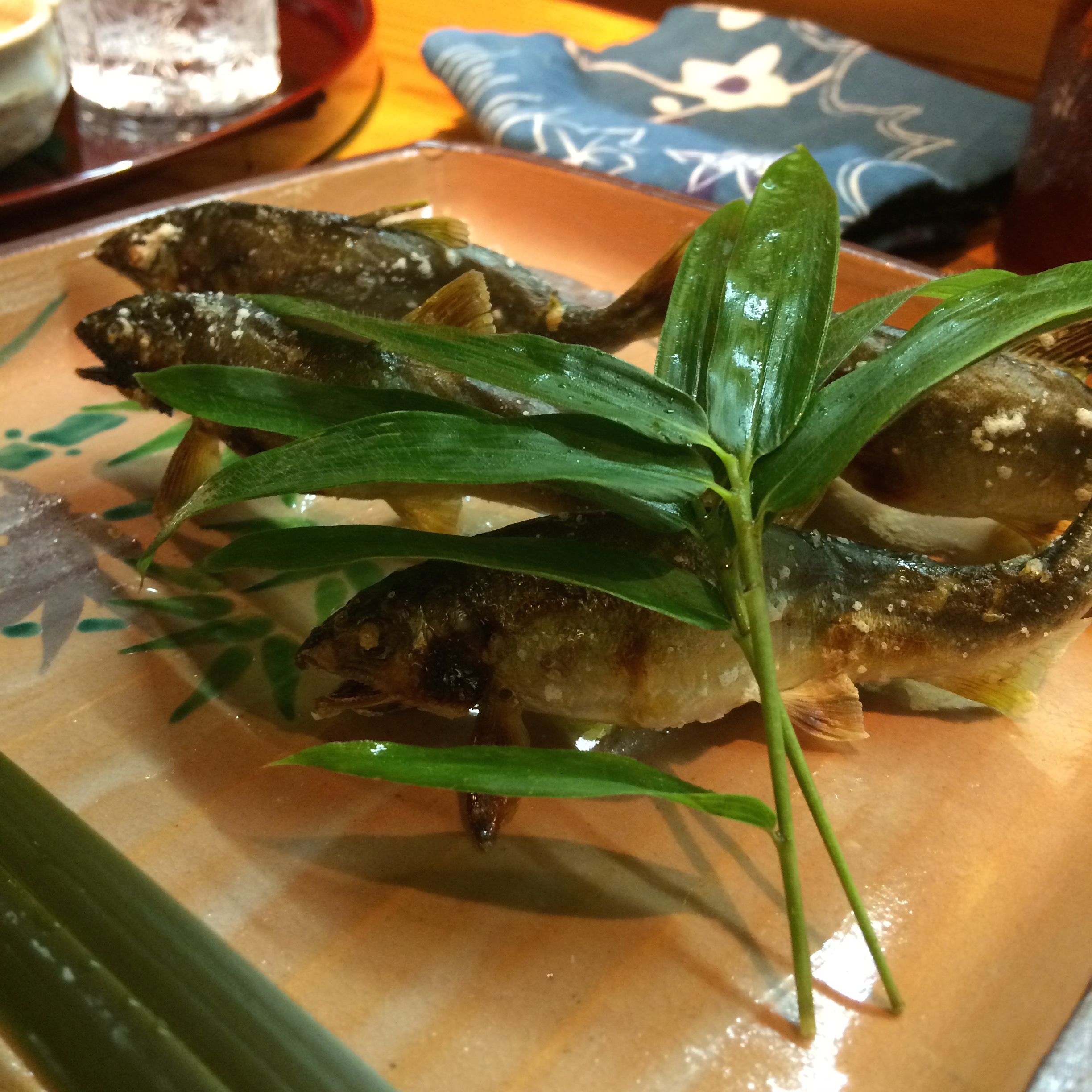
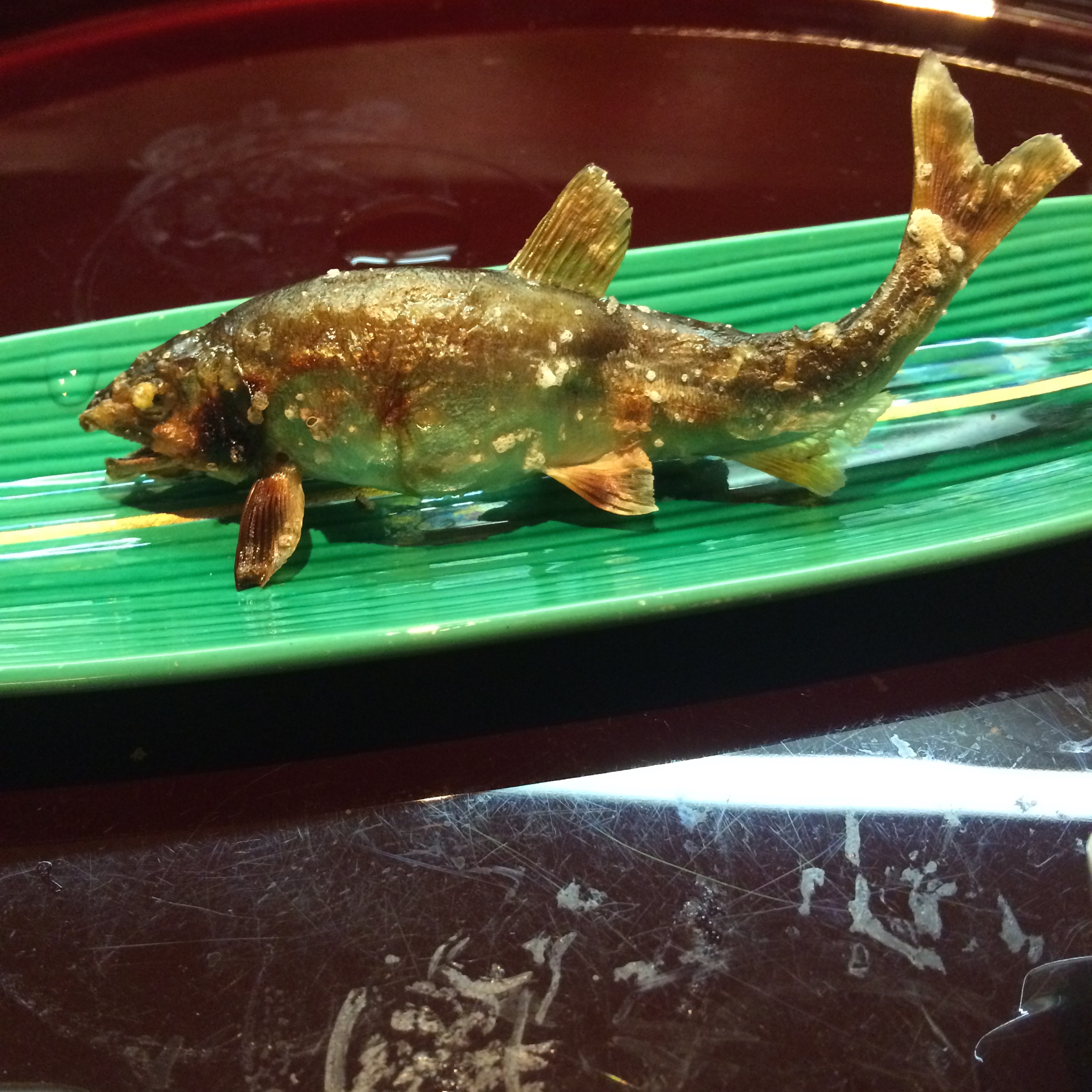
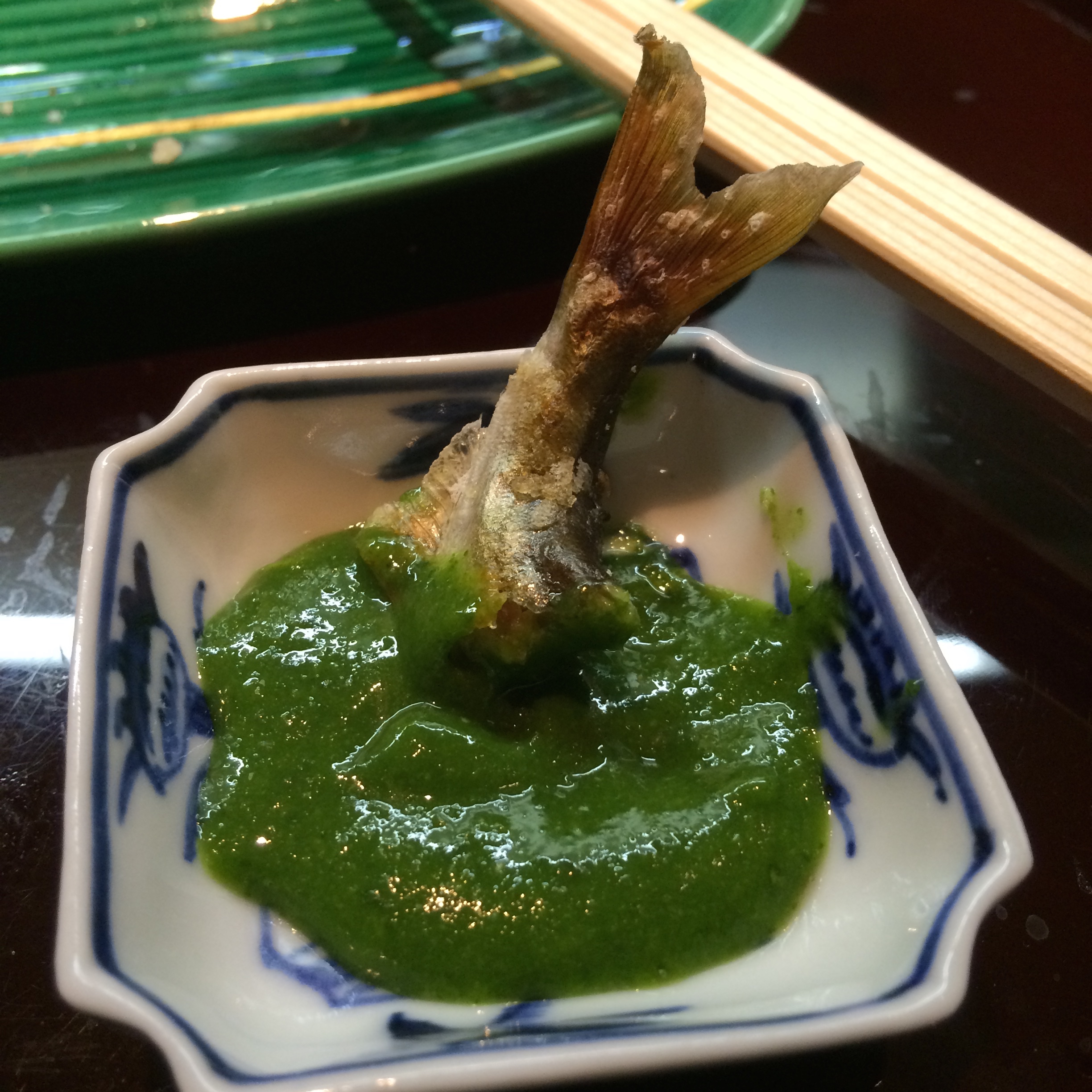
The 6th course was one that we had anticipated for a while because we watched it’s creation. A few courses before we saw one of the chefs holding live fish, and quickly skewering them and putting them into the oven to cook. I have to admit, I somewhat dreaded this course but honestly these sweet fish and the dipping sauce that came with it were pretty damn good.
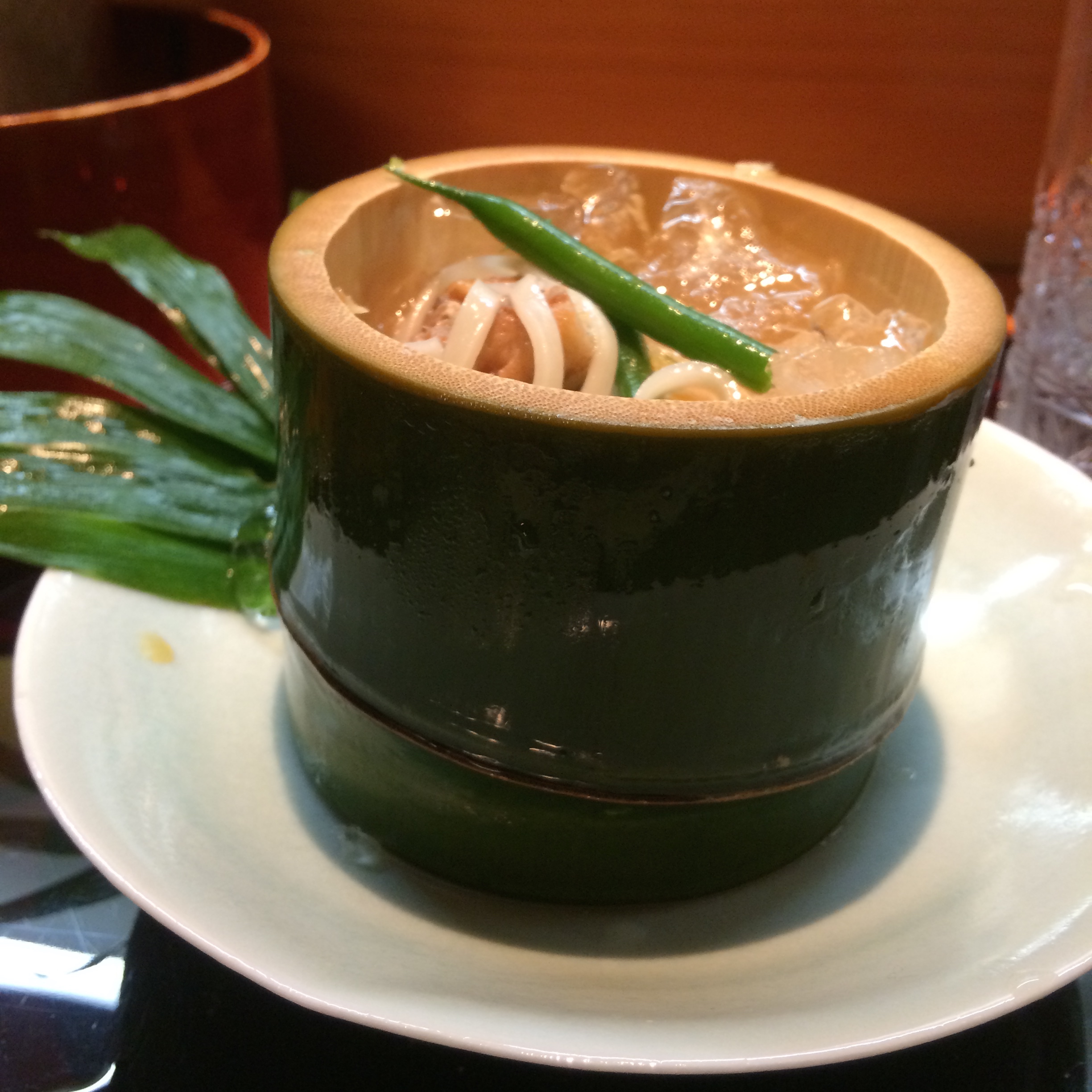
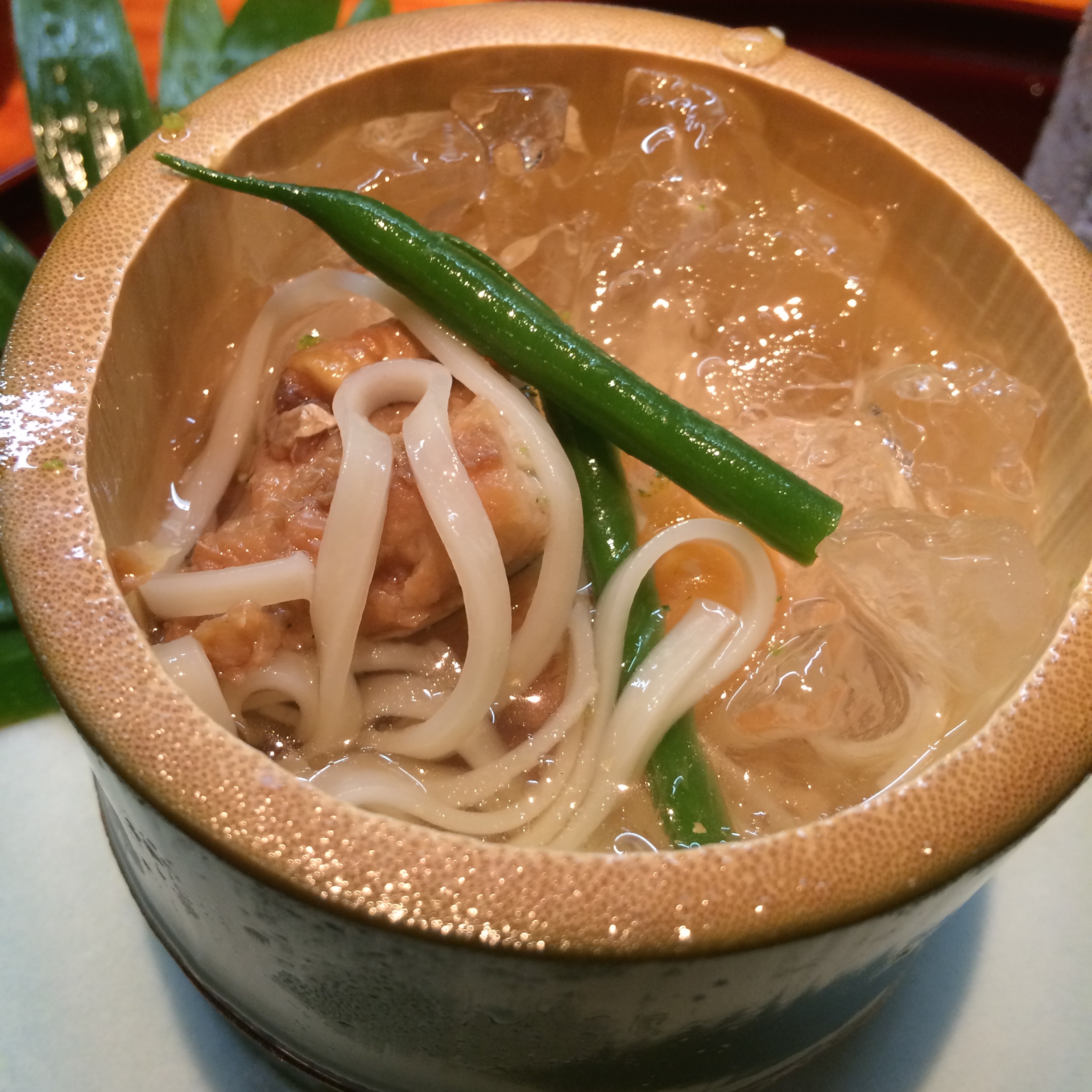
Next up, served in bamboo, were fresh noodles with sea bean, abalone, and an egg. Noodles etc. were to be removed from their ice bath, plunged into the dipping sauce of soy sauce and sesame seeds and eaten.
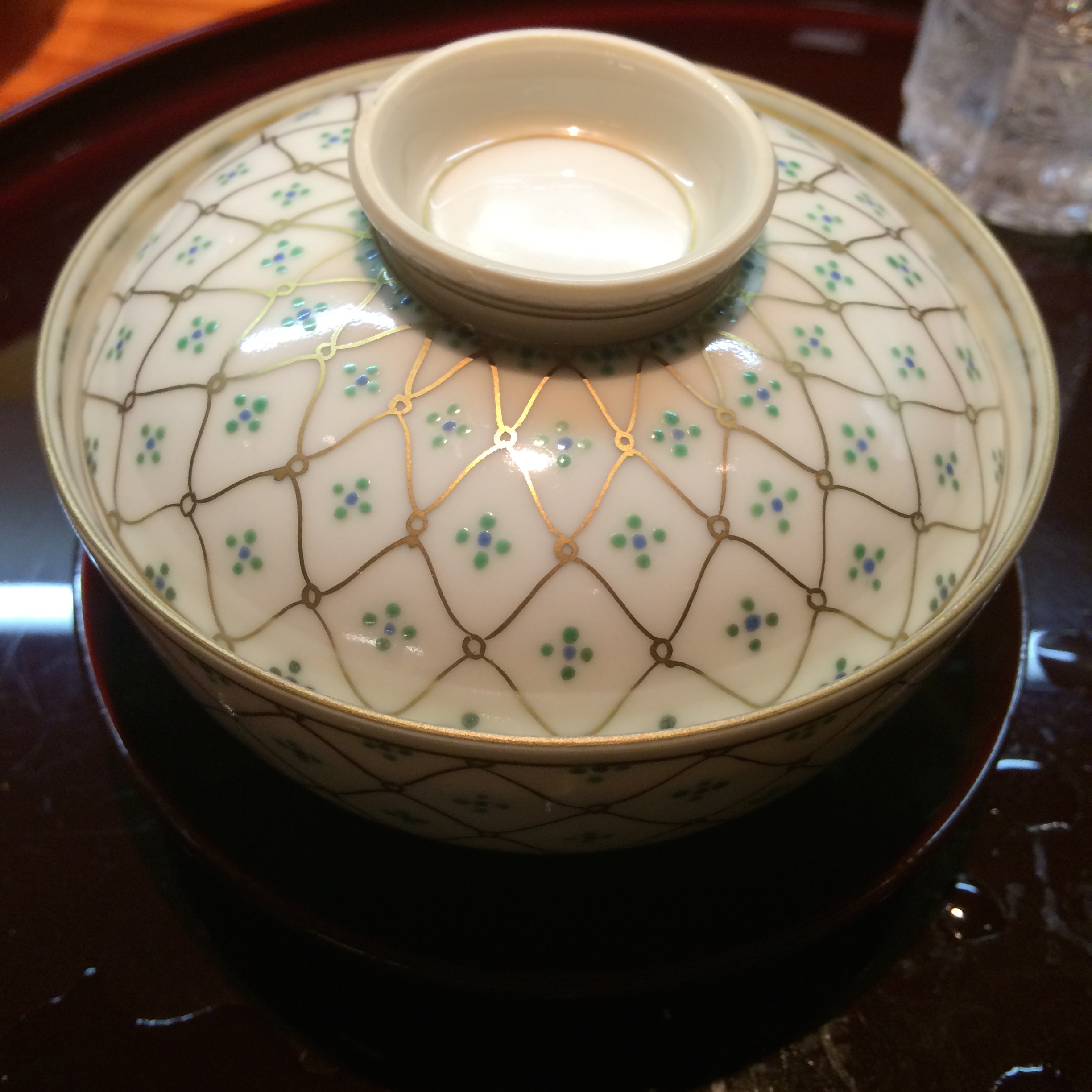
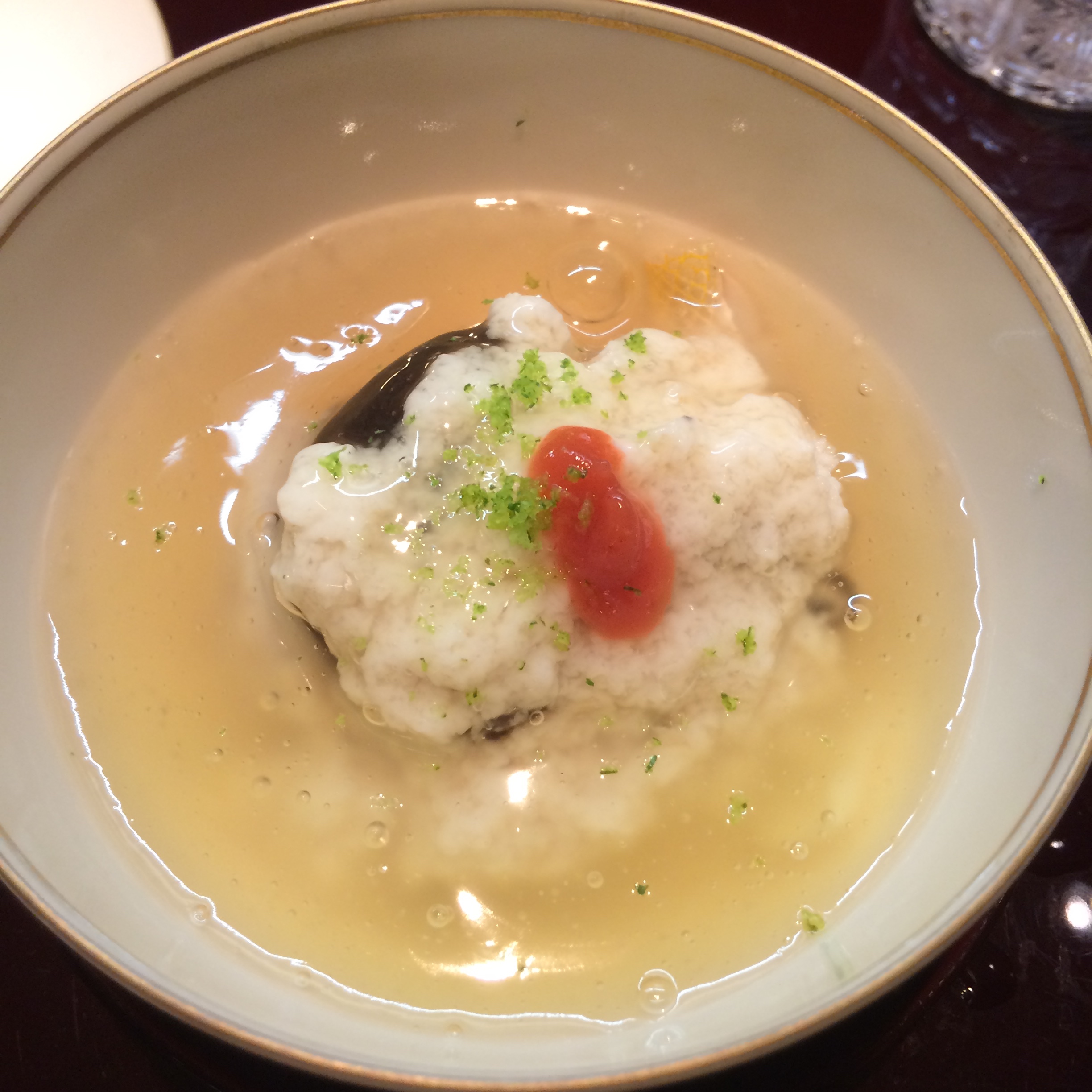
The last soup dish was one of sea bream, lotus root and chestnuts. I loved the chestnuts hidden at the bottom and the flavor of the lotus root in this almost porridge-like soup.
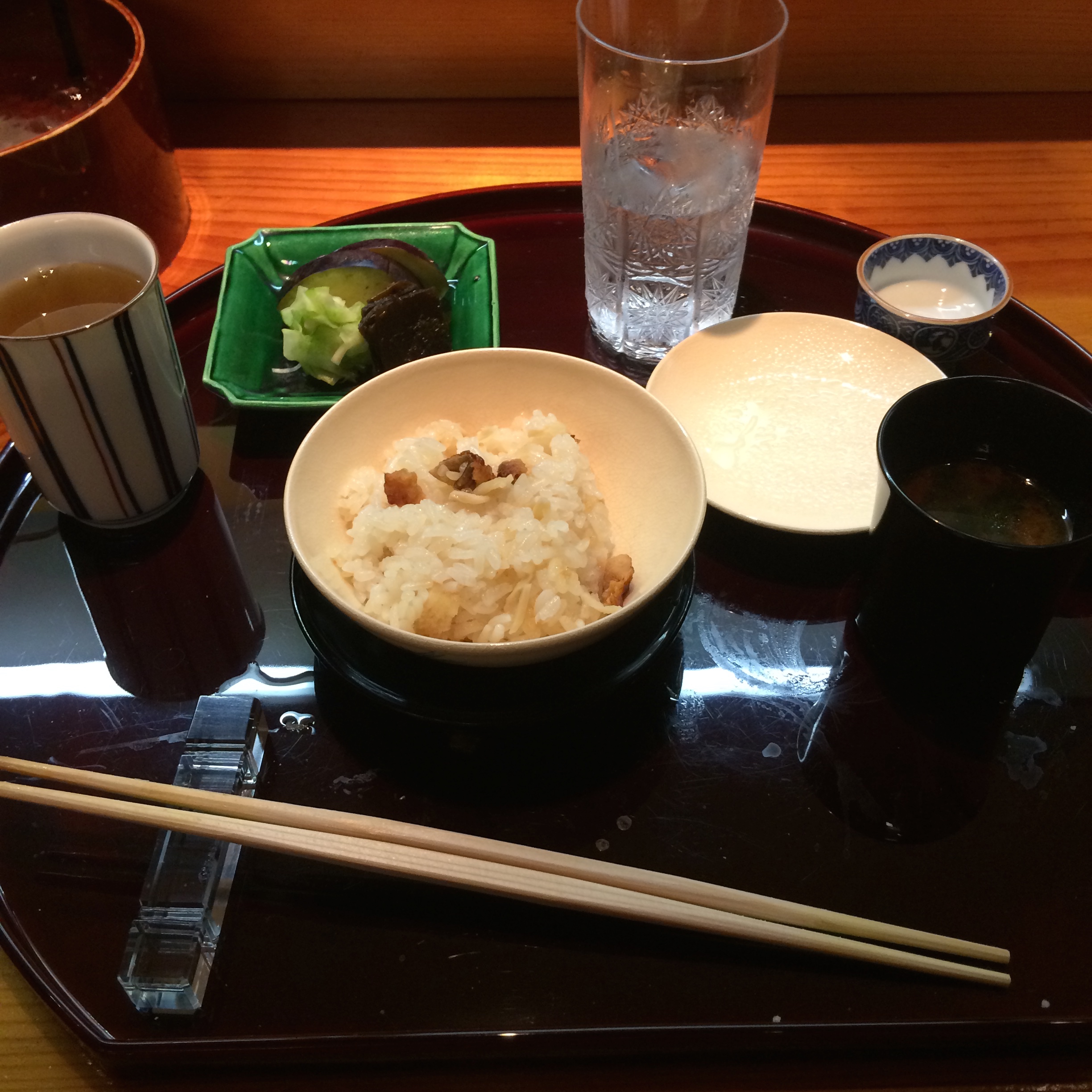
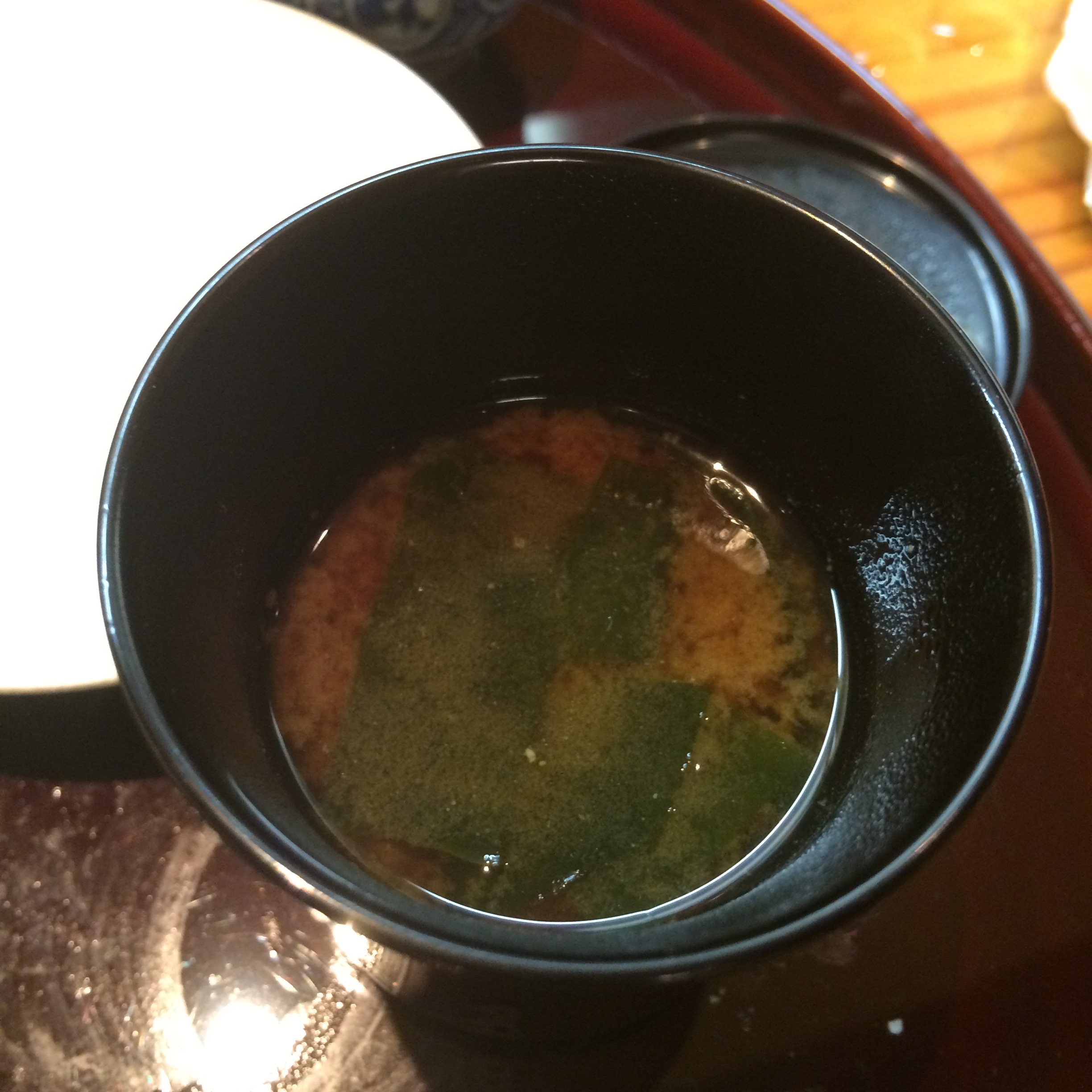
The last savory course was traditional – pickled vegetables (very big here), sticky rice with chestnuts (in season here in Japan), miso soup, and tea.


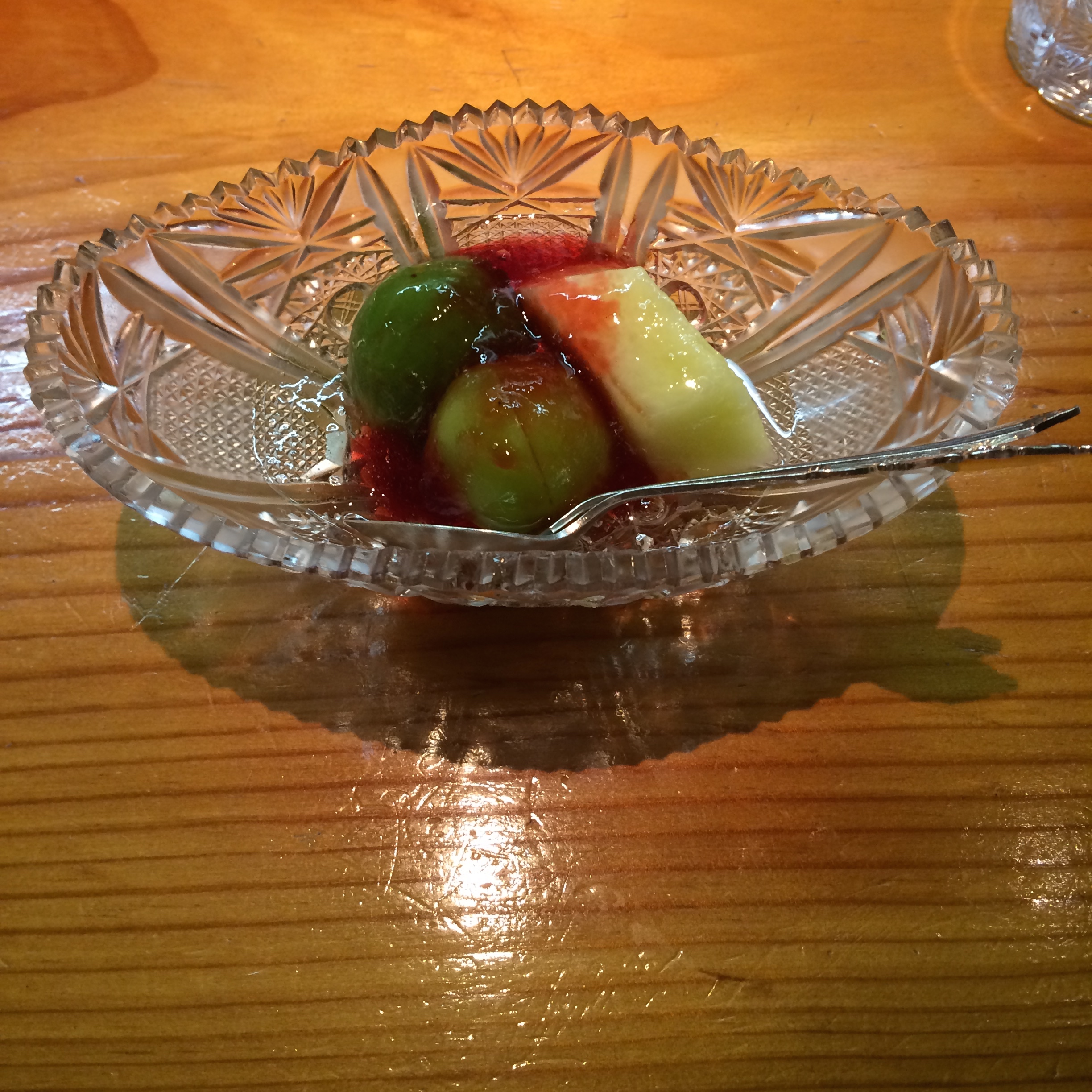
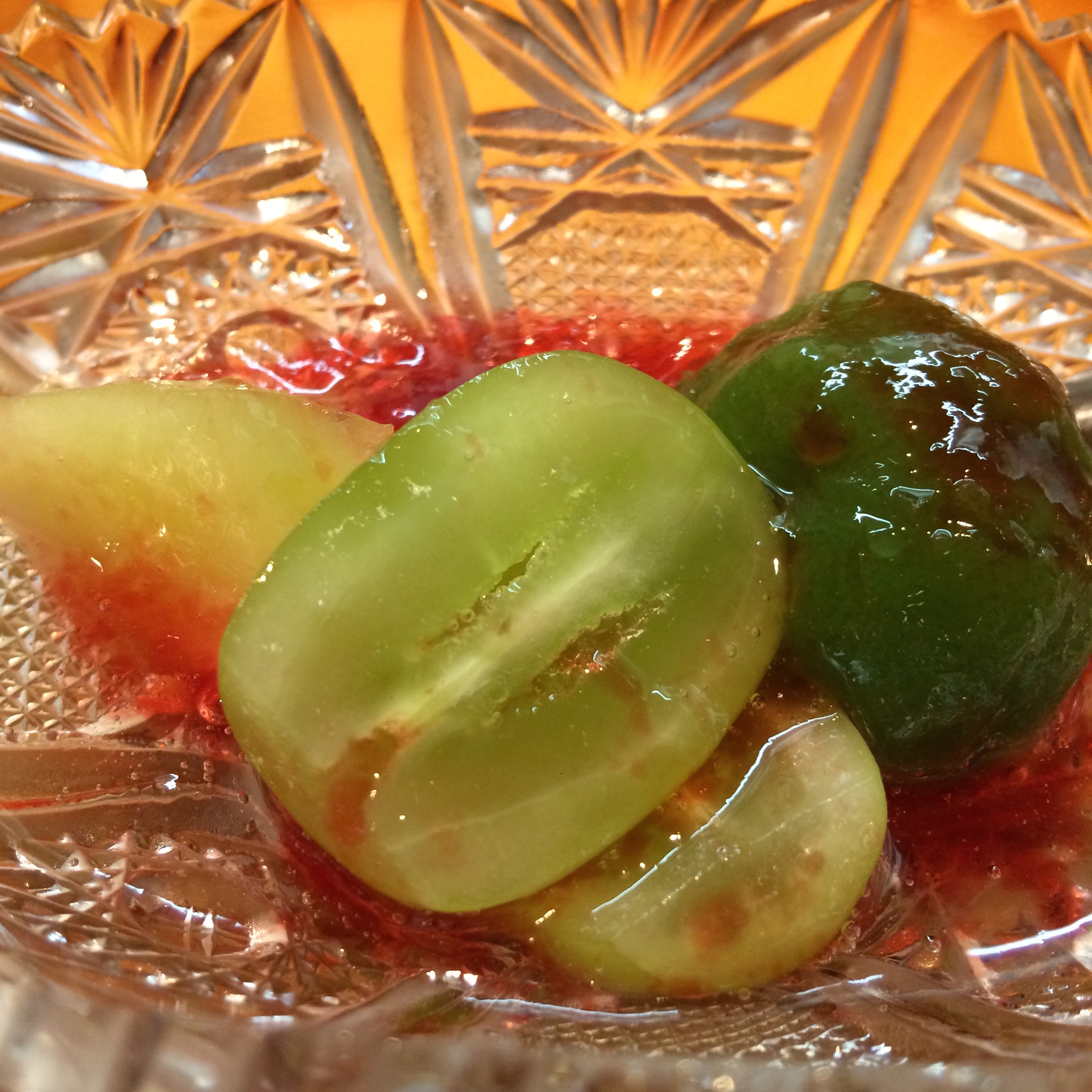
Dessert began with fruit: Japanese apricot, a green grape and melon in wine jelly. The Japanese take their fruit very seriously, so these small selections were fantastically flavorful.
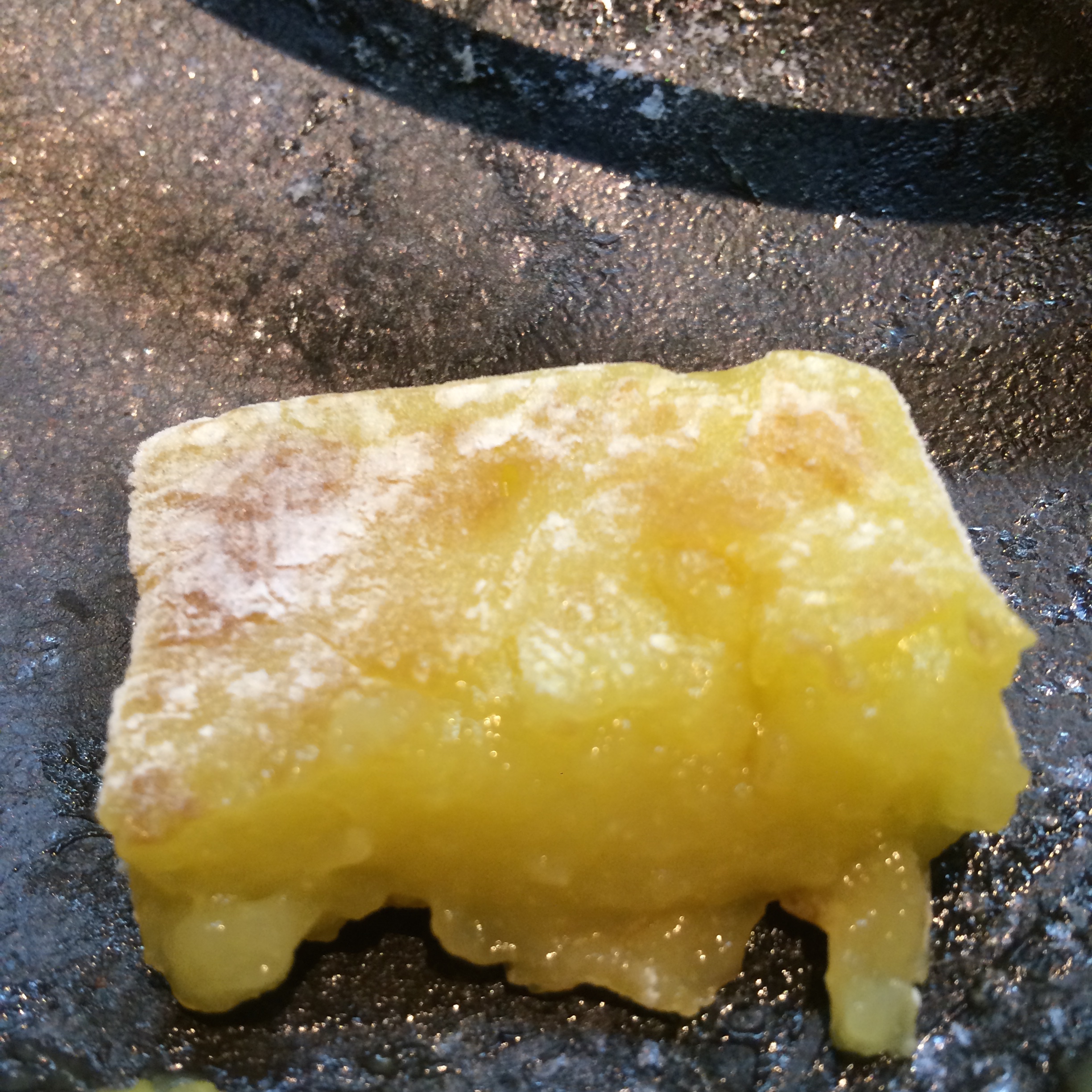
Kaiseki desserts end with a “dry” sweet, which in this case ended with a twist on mochi, which is all over Kyoto. This was a homemade sweet corn mochi, served warm. It’s been a couple of days since this meal and I’m still thinking about this really unique dessert. I wish it was more commonplace so I could go buy some at the market here – that corn flavor was creamy and perfect.

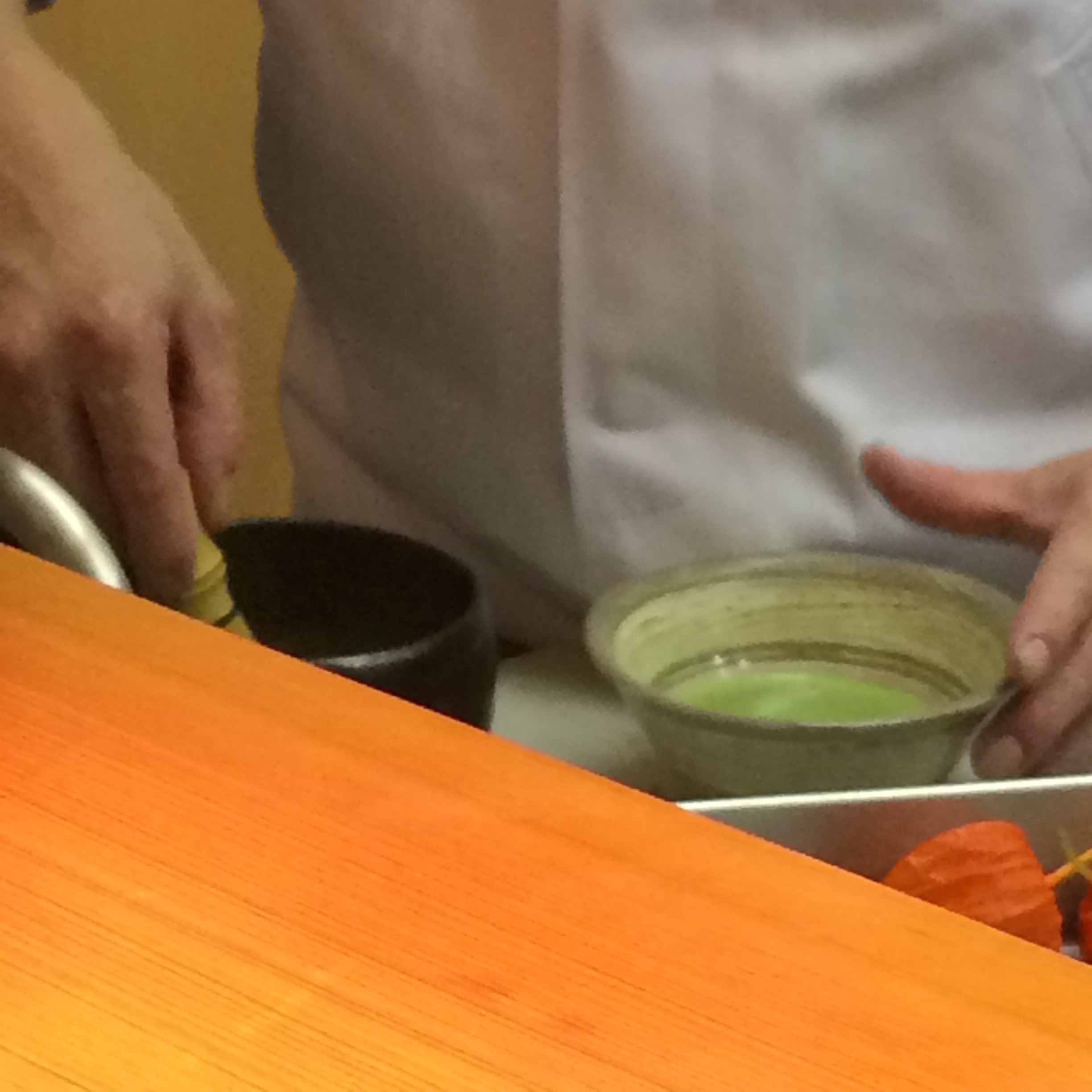
The meal came to a close with traditional Matcha Green Tea. Chef whisked this high-grade green-tea powder for a few minutes to create this bowl of tea. Like so many things here, it is all part of the ritual and tradition. Look at that deep green color!

This was such a great way to kick off our time in Kyoto. I loved the setting for this meal, all of the beautiful dishes used for each course, and just getting to understand the traditional foods and styles of Kyoto. There is so much more where this came from – temples and monkeys and gardens, and a lot more food – so stay tuned.
 The Laid-Off Life
Have you been to a baseball game yet?
LikeLike